

Bora Italy SPA
Download Case Study PDF- Implemented By:
- Digimark
- Implemented In:
- 2020
- Industry:
- Manufacturing
- Country:
- Italy
- Customer Website:
- bora-italy.eu/index.php/en/
- Use Cases:
Material Flow
Warehouse Utilization
Forklift tracking
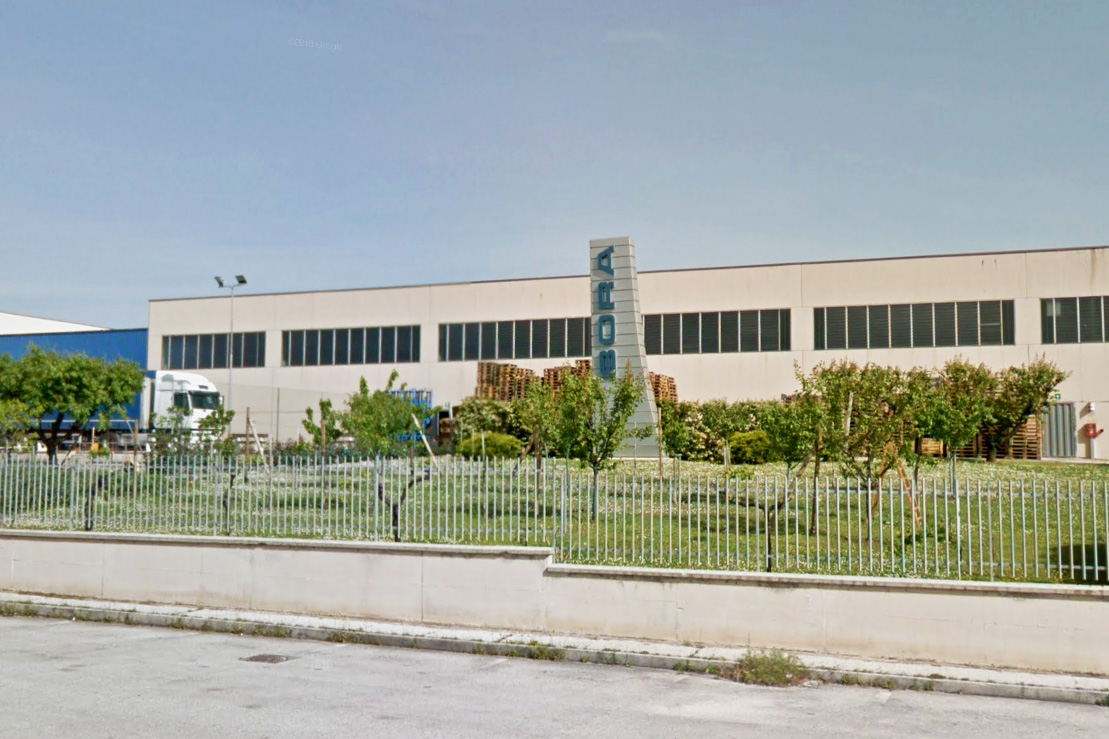
Optimization of Efficiency and Warehouse Layout by Monitoring Forklift Trucks Using RTLS
Background
Masters in Automotive Molds
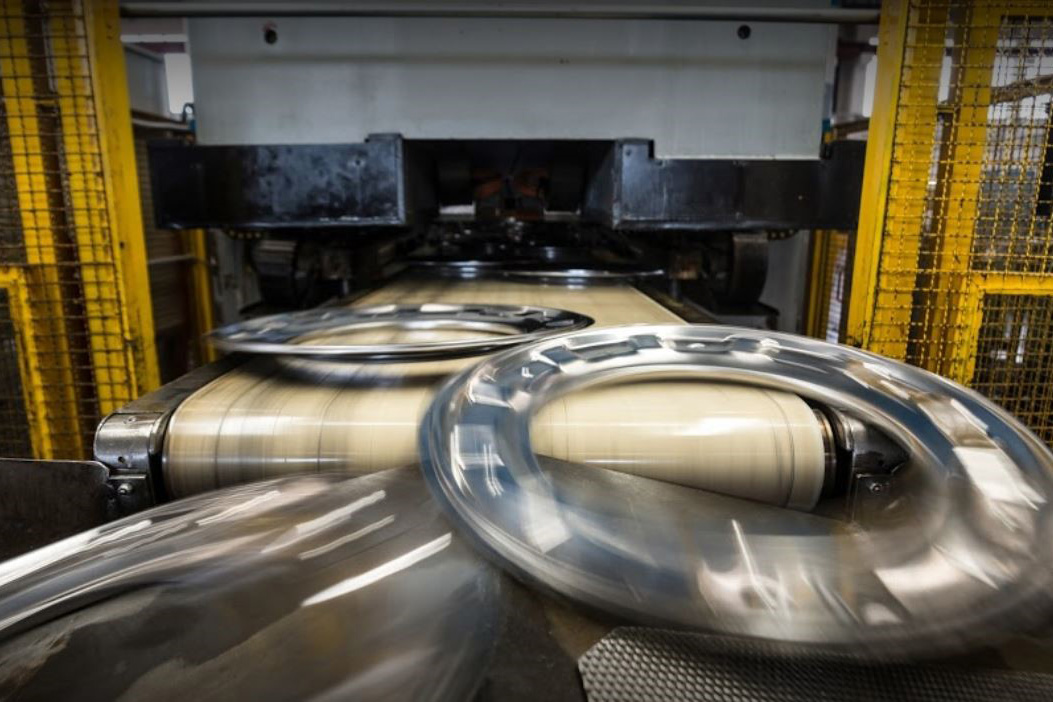
Bora Italy is a leader in the molding of metal components for the automotive and household appliance sectors. In an area of approximately 2,000 square meters, Bora Italy also carries out the design, manufacturing and maintenance of molds. The continuous interaction between the R&D, mold, molding and quality departments allows Bora to collaborate with major national and international players in their reference sectors.
Goals
The Need to Boost Production Speed and Efficiency
Applying FIFO logic is the long-term goal Bora Italy intends to achieve. However, in the short term, for greater production speed and efficiency, the main objective of the project was to eliminate the risk of unnoticed withdrawal from the warehouse of materials/products that do not comply with the actual processing or delivery needs. To achieve this goal, therefore, it was necessary to manage the warehouse optimally through:
- the location of the goods;
- the identification and monitoring of goods in areas without shelves and that are not visible;
- the identification and monitoring of assets;
- the calculation of the height of the forks of the forklifts to identify the location of the goods precisely.
Challenges
Tracking Mixed Goods in Stacks Along Narrow Aisles and Corners
The main problem encountered was ensuring the correct location of the materials, creating a flexible system that:
- limited the intervention of the forklift driver in determining the storage of goods;
- totally eliminated the risk of incorrect product pick-up and delivery;
- used areas that are not visible and do not have shelves;
- remedied the absence of recognition and/or information, such as recognizing a package to be picked up or deposited among many that contain the same article;
- accurately calculated the height of the forks of the forklift to manage the overlapping of stacks of mixed goods and positioning and picking in corners and narrow aisles.
For the quick identification of the locations of goods by the forklift drivers, it would have been sufficient to apply codes to the shelves, aisles and various areas. This localization method is, however, only possible in warehouses with fixed structures, designed, a priori, on the basis of previous needs, equipped with shelves and with the same type of goods.
On the contrary, by producing for third parties, Bora:
- has to manage different types of materials according to the periods;
- is equipped with a warehouse characterized by areas without shelves, with a quantitative limit on the amount of stackable goods.
In particular:
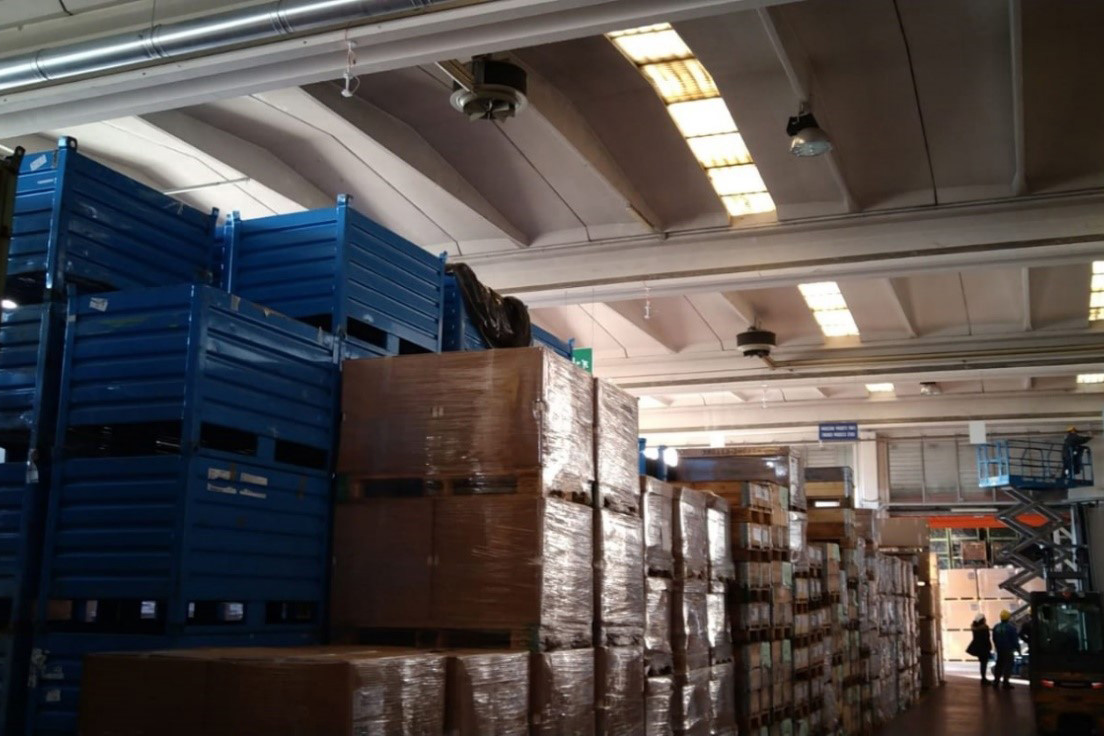
- the handling units in the specific case consist mostly of metal boxes, gabions and pallets;
- 80% of the finished product is stored in the warehouse creating stacks on the ground and only the remaining 20% is placed on the shelves;
- the warehouse structure has various corners and narrow aisles.
By virtue of these needs and other critical issues, Digimark has developed a real-time monitoring system for materials for Bora Italy that follows the logic of automatic warehouses. For the implementation of this system, we relied on Sewio’s ultrawideband technology which, compared to other technologies on the market is capable of being perceived even in harsh environments. In the specific case of Bora Italy a Time Difference of Arrival positioning methodology and, therefore:
- correct localization of the tags;
- the elimination of loading errors and removal of materials;
- an accuracy of 10-30 cm;
- a storage system that is as flexible as possible.
Furthermore, to give Bora Italy the possibility to build stacks of mixed goods and to be precise in positioning and picking up material in narrow aisles and corners, we, at Digimark, have developed a system for monitoring the height of the goods and the orientation of the forklift.
Solution
3D Positioning Measuring the Height of the Forks of the Forklift To Track Goods Within the Stacks
The project that Digimark has developed for Bora Italy, adopting Sewio hardware technology, can be divided into four macro-phases
- The configuration of the RTLS system
- The development of the macro software structure
- The development of the notification system
- The development of logics for suggesting storage locations
In the first phase, the number of anchors to be installed to cover the warehouse area of 1,000 m2 was assessed first. Such anchors:
- were placed one meter from the ceiling so as to avoid interference from reflection of the waves;
- were connected with CAT6 Ethernet cables to a 24-port PoE switch, which also supplies them with the power necessary for operation.
The switch, in turn, is connected to the server where the software that calculates the positioning of the tags is running. Subsequently, the movement of materials was taken into account.
Therefore, the forklifts are equipped with:
- an RTLS positioning tag that defines their position in the warehouse space in real time;
- a piece presence sensor that identifies whether or not the material is present on the fork;
- a tablet PC, with the management application;
- a barcode reader to identify the cash desk if it is not yet present in the system database.
Detail of the anchors installed in the central row of the warehouse.
The positioning tag has been inserted on the fork of the forklift in order to monitor its position in the three-dimensional space, also allowing to trace the exact position of the materials, both on the individual shelves and on the possible stacks.
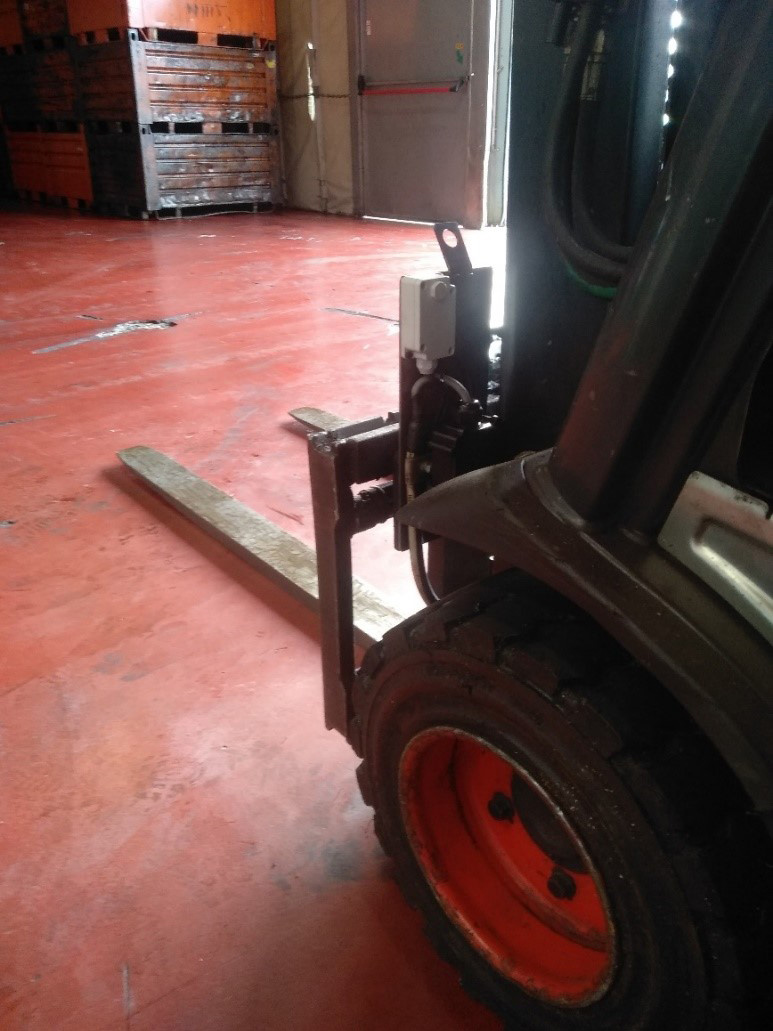
Detail of the tag mounted on the fork of a trolley.
After configuring the RTLS system, we, at Digimark, took care of the development of the heart of the management system, that is the software, which defines its entire operating logic. In particular, we have divided the software development into the server and tablet.
The program installed on the tablet, developed in the Microsoft.NET environment in C# language, deals with:
- the location of the trolley in real time;
- offering the forklift driver information on the material to be picked up or stored in the warehouse;
- managing the identification of the material by means of the scanner;
- providing the operator with a notification if there is material ready to be picked up on a machine in the production department.
The tablets are connected to the corporate Wi-Fi network and communicate with the server by means of TCP/IP Internet protocols. In contrast, the server, developed in NodeJS language for the backend part and in Angular JS for the front-end part, runs inside a Docker virtualization and:
- manages the flow of information to and from tablets, taking care of saving data in the database and interrogating it when requested by the application on the cart;
- also manages the suggestions for the forklift driver, advising the most suitable locations for storing the goods during the warehouse loading phase, where is the parcel to pick (based on FIFO policies) and the position of all other boxes containing items compatible with the withdrawal;
- has a user interface that can be used through a browser, from where it is possible to consult the material in the warehouse, the loading lists, the material ready for collection at the machines and perform manual adjustments.
The database on which the system data resides is non-relational and the engine used is MySQL, while the tracking system has its own proprietary application that runs on a dedicated Linux-based machine.
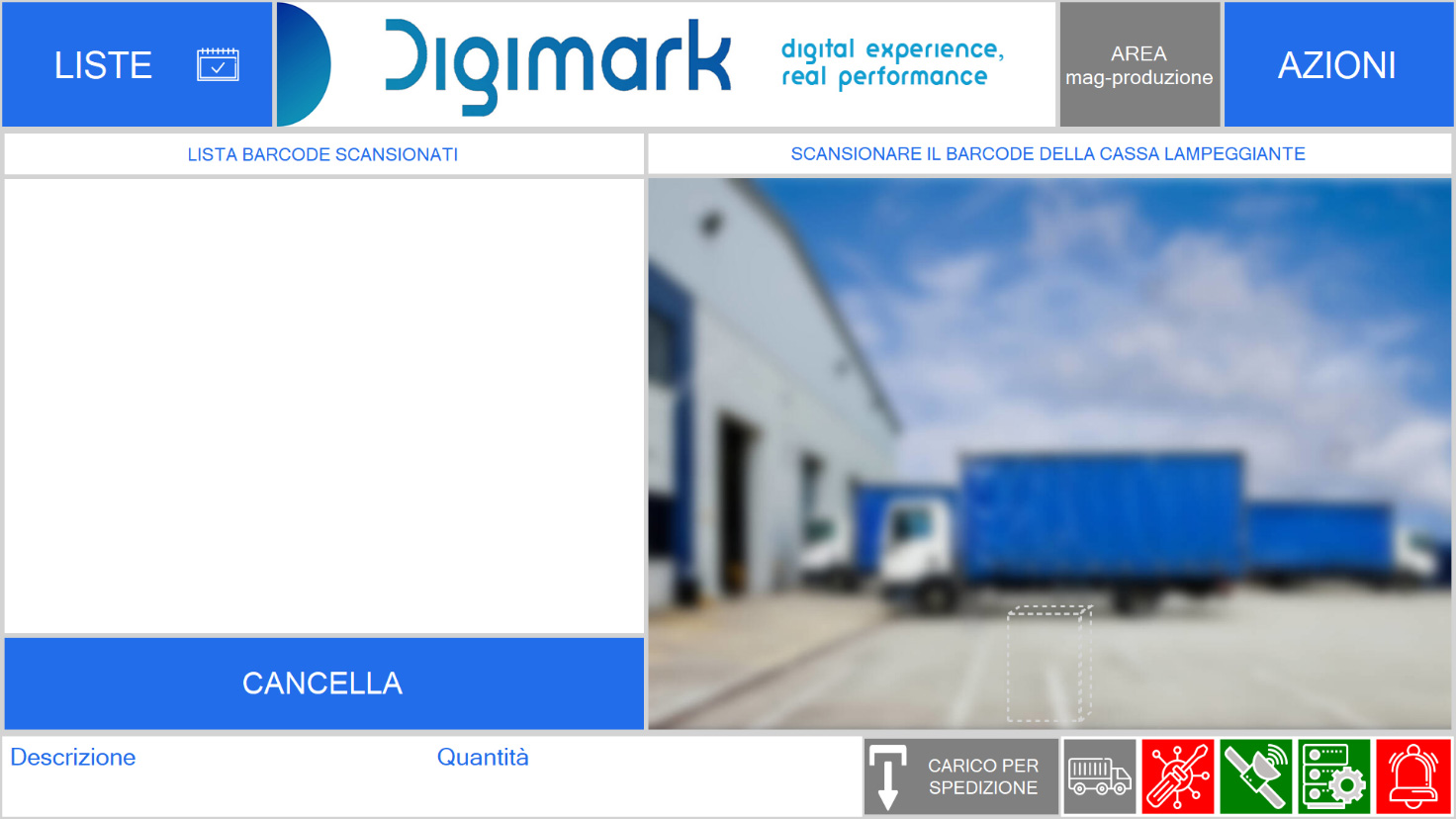
Screen for scanning and checking incoming and outgoing materials.
Furthermore, to facilitate the work of the forklift drivers, a system of notifications has been created that warns them whenever one or more crates are ready to be collected in the production department, also providing on the screen of the tablet they are supplied with information about the machine from which to pick up the goods, as well as its position within the production area.
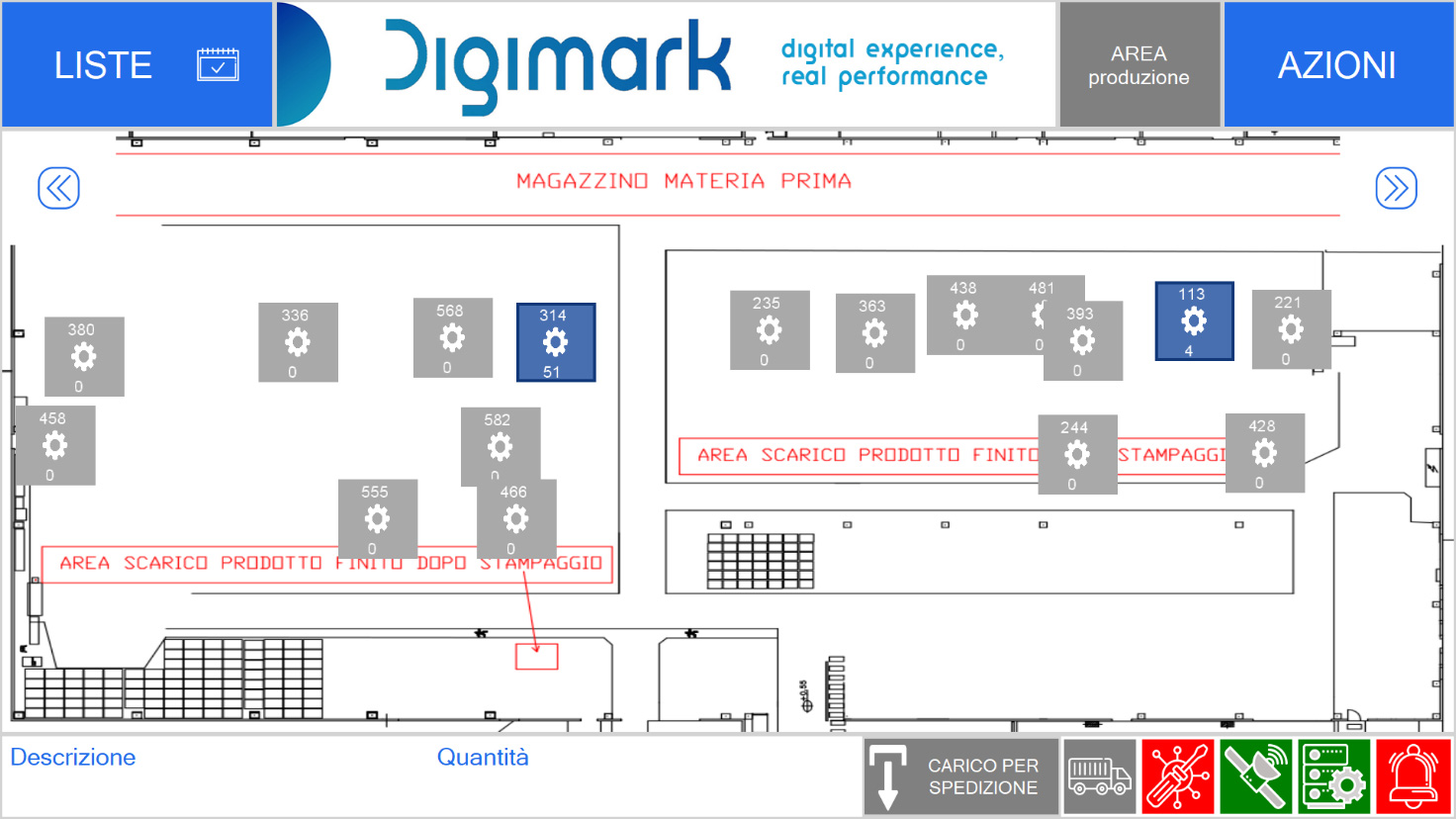
Display screen for taking charge of goods in the production area.
Lastly, the system provides a logic for suggesting the location of the material to the forklift driver, indicating the stacks already complete, measuring the height of the forks and, therefore, of the pile where the material is to be deposited.
Therefore, the RTLS logistic system interfaces with the ERP system in use within Bora by means of shared exchange tables on its database. From the Oasi system, the Digimark logistics software accesses information relating to the identified material by scanning the barcode on the package, the picking lists for the delivery of the goods and the crates ready to be picked up in production. Subsequently, the movements within the monitored warehouse are implicitly managed by the system without these actions being explicitly indicated or inserted manually from the staff.
Results
Increasing Logistic Productivity and Warehouse Utilization
The following results have been achieved using the Digimark’s system and the integration with ERP and Sewio RTLS:
- greater efficiency and speed in finding goods
- a decrease in costs caused by errors and inefficiencies
- better assessment of stock
- zero inventories
- a decrease in storage time
- zero risk of collision between moving vehicles thanks to real-time forklift tracking
- greater productivity of forklift drivers
- better warehouse management, which reflects on a greater speed of production and shipment of the goods, with consequent customer satisfaction and prompt response to the market
- zero risk of an unnoticed withdrawal from the warehouse of materials/products that do not comply with the actual processing or delivery needs
Key criteria for choosing Sewio
Key Factors for Choosing Sewio RTLS
- 30 cm accuracy which allows the full flexibility and variability of virtual zones without any changes of infrastructure
- The ability to easily set an unlimited number of virtual zones that can be updated with a single click at any time in the future to adapt to any updates of processes
- Bi-directional seamless third-party integration with a fully-documented Open API
- Proven successful IOT projects using methodology and technology, backed up by unrivalled 10+ years of UWB expertise
- Multi-level support based on SLAs from the people who built the product
- The ability to scale the system easily and quickly to track more objects and expand the system to more halls

I find that Sewio products are excellent in terms of precision, flexibility and ease of installation. The project for Bora Italy was by no means trivial and the environment in which the system operates presented some critical issues, but the RTLS localization architecture proved to be reliable and with a high signal stability in every position. The biggest challenge was detecting the height of the forks of the trolley during the positioning phase with centimeter accuracy, but I must say that the tags proved to be very precise. This aspect, combined with the rich documentation and the availability and professionalism of Sewio technical assistance, has transformed the challenge into a success.” Simone Neri, Business Owner Digimark and technical area manager