What Is Industrial RTLS?
Industrial RTLS (real-time location system or real-time locating system) is a tool that tells you exactly where objects, vehicles, and people are within a building or yard. At any moment. The systems can be used for indoor tracking, especially in factories, warehouses, and airports. They can also be used for locating objects outdoors in industrial yards and parking lots.
RTLS uses small wireless tags attached to products, tools, forklifts, or worn by workers. The tags send information about their location through radio signals, using various technologies such as ultra-wideband (UWB), Bluetooth, or GPS. The signal is picked up by anchors installed around the area. The anchors pass the information to the RTLS software, which counts the position and creates a live map of your area.
The entire locating process takes less than one second, so you can see exactly which way your pallets are moving right now.
The Role of RTLS in Manufacturing
Factories are tough environments—full of metal, dust, and obstacles that disrupt radio signals. That’s why the best real-time locating system for industrial use is one that’s built for harsh conditions: robust, reliable and accurate. The system delivers live data to RTLS dashboards and other systems, allowing you to track flow, find material fast, and spot unsafe traffic. With industrial RTLS running in the background, your team stays focused on production instead of searching for parts.
Industrial Positioning Systems Applications
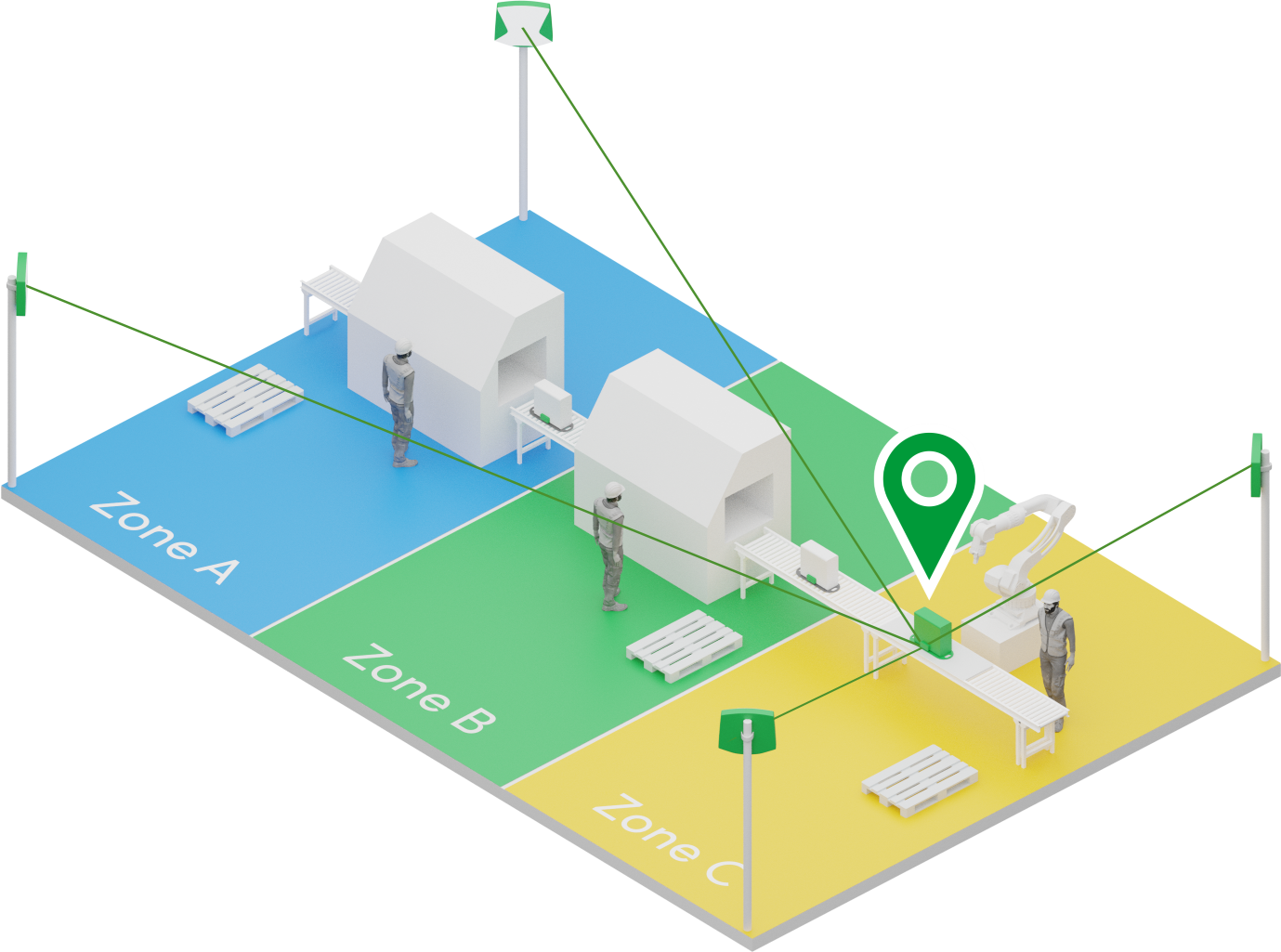
Work-in-Progress Tracking
Eliminate downtime and delays with production tracking and gain real-time visibility into every order, stage, and material on the shop floor.
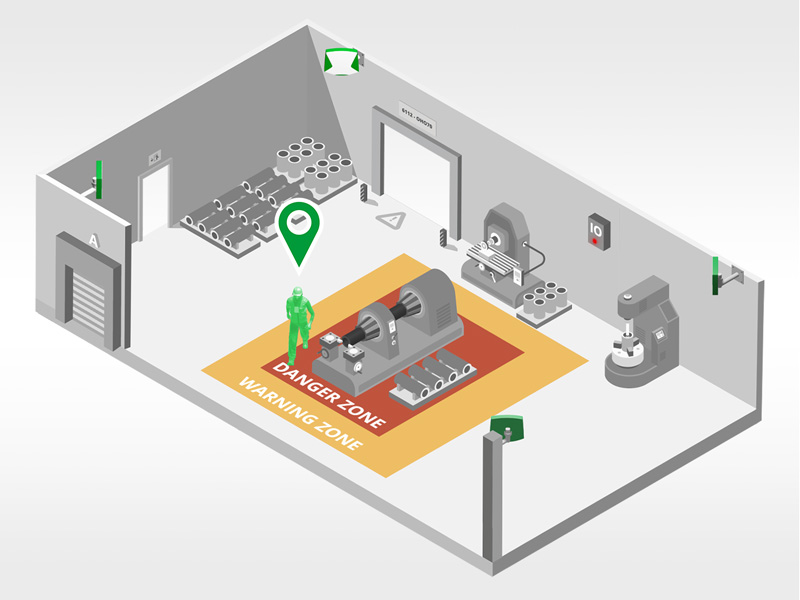
Connected Worker
RTLS for connected workers helps prevent accidents, reduces quality issues, and creates a foundation for more efficient operations.
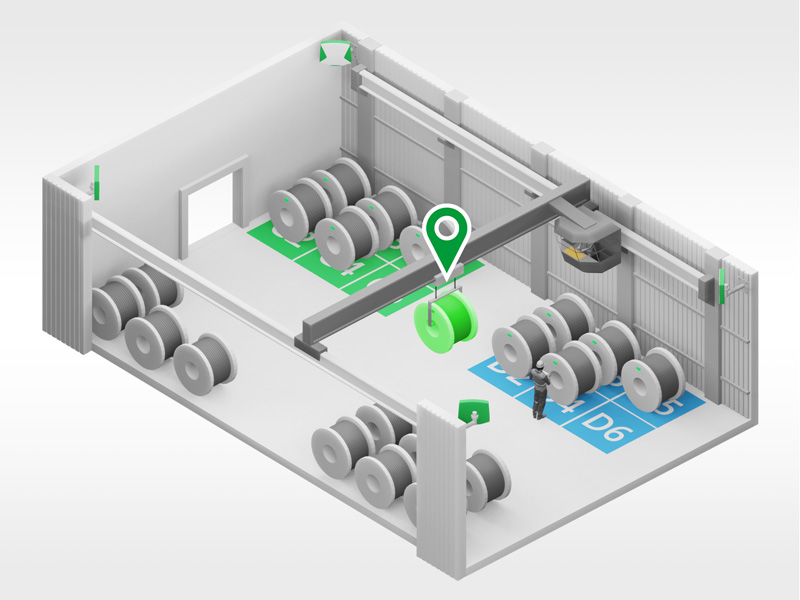
Asset Tracking
Keep production moving by knowing where your tools, equipment, and machinery are with real-time asset tracking.
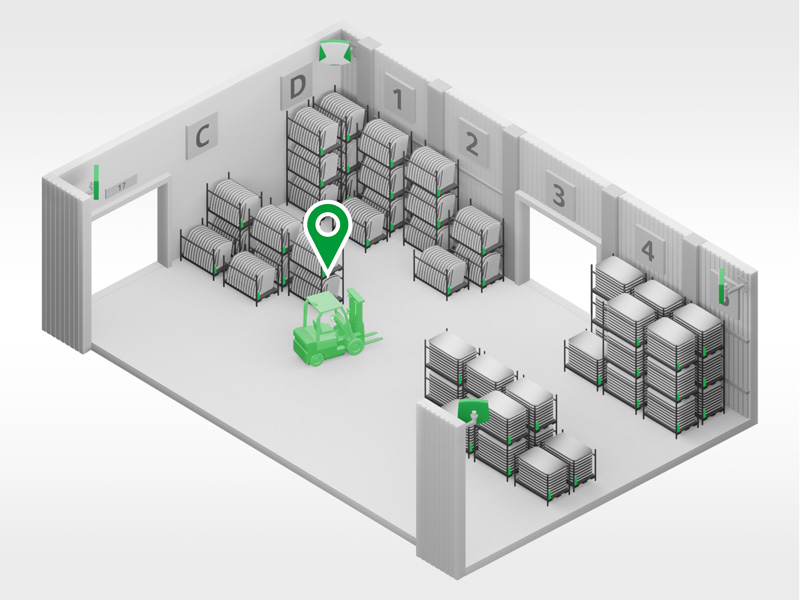
Intralogistics Tracking
Tracking material handling vehicles helps prevent collisions, spot bottlenecks, and make better use of your vehicles.
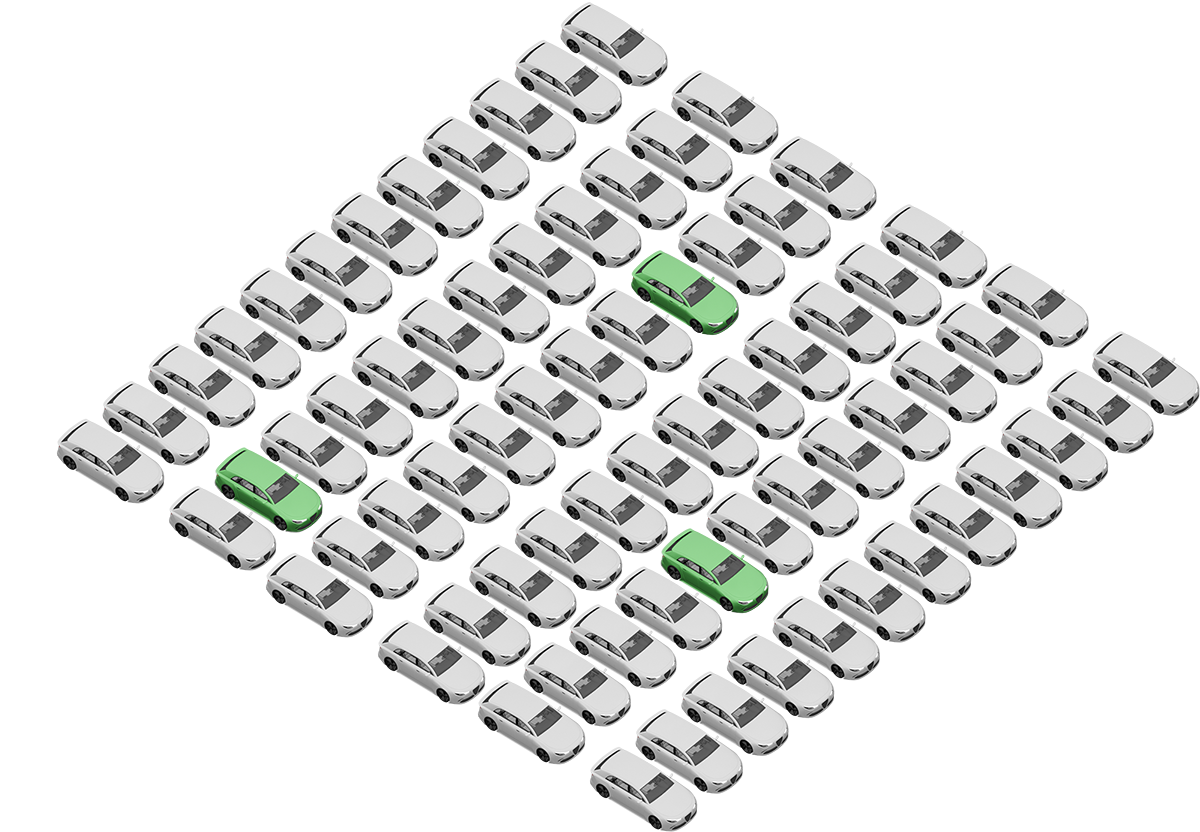
Yard Visibility
Gain full visibility of your yard or parking lot with RTLS to cut search time and make navigation easier.
8 Factors for Choosing the Right Location Service
- Flexibility Based on Superior Accuracy
- Scalability for Any Size of Projects, Now or in the Future
- Performance in Harsh Environments
- Reliability in Metal-Heavy Environments
- One Infrastructure for Multiple Use Cases
- Open and Well-Documented API
- Transparent RTLS Cost and Maintenance Budget
- Fast Deployment and Easy User Adoption
1. Flexibility for End-to-End Production Tracking
In many factories, the position of an object tells you exactly what stage of production it's in. For example, a pallet of materials near the press shop is ready for pressing. Once that same pallet moves toward the welding area, you can safely assume welding has started.
This is managed with virtual zones or geofencing, which are digital areas drawn inside the RTLS software. Each zone matches a process step or part of it. You can create unlimited zones, adjust their shapes to fit your floor layout, and update them instantly as the factory changes. Because many zones sit close together and some are quite small, you need location data that is accurate, reliable, and refreshed often. Without that, zoning data can't be trusted for production monitoring, planning, or automatic actions like starting the next job.

Advanced industrial RTLS platforms go further by letting you add zone logic. That includes rules like conditional positioning, making zones exclusive to prevent overlap, or setting in/out timeouts so that short signal jumps don't trigger false actions. This helps the system follow the real production more accurately.
Different technologies can power RTLS, each with pros and cons. GPS works well outdoors, in yards or large parking areas, but it doesn't reach inside buildings. Bluetooth is affordable and good for basic asset tracking, but it struggles with reliability in metal-heavy environments. Ultra-Wideband (UWB) delivers the highest precision (down to about 30 cm / 1 ft), which makes it the best fit for indoor location tracking and production tracking where accuracy matters. However, UWB requires a bit more setup. That's why we always recommend the technology or combination that best meets your needs.

2. Scalability for Any Size of Projects, Now or in the Future
For an RTLS project to deliver real ROI, it must grow with your business. A scalable system lets you start small and expand without rebuilding everything.
With the right industrial RTLS, you can:
- Track thousands of objects (tags) at the same time, even in the same area
- Cover very large spaces, from a single hall to an entire factory campus
- Add new tags or expand coverage as you go, without reconfiguring the system
- Customize tags with extra sensors to capture more than just location
In comparison to many other indoor or outdoor tracking technologies, our RTLS can handle thousands of tags across tens of thousands of square meters. Plus, expanding the tracked area doesn't mean downtime. The system keeps running while you scale.

Covered area
100,000+ m2

Number of facilities
unlimited

Number of tracked objects
unlimited

Number of different objects
unlimited
3. Performance in Harsh Environments
One big benefit of digitalizing production is fewer errors. When industrial RTLS data drives your core processes, the system must be dependable. That means high uptime and reliability of 99.9% or better.
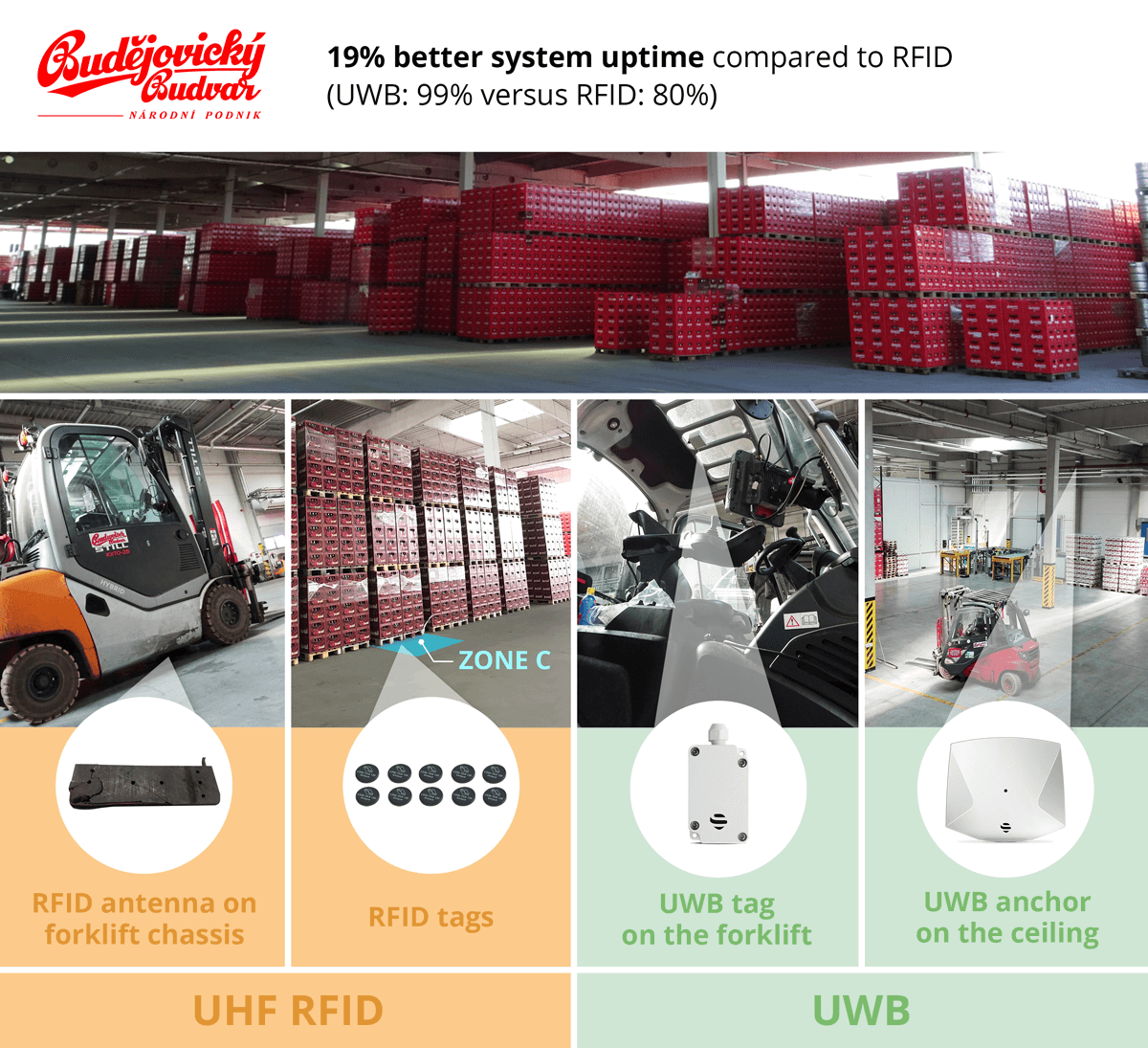
Our RTLS is designed for this level of reliability. Compared to some other tracking systems, like RFID, our anchors are mounted overhead on ceilings, where they are protected from damage, ensuring steady operation. On top of that, rugged industrial tags are built to withstand dust, vibration, and impacts, so they keep working even in the toughest scrap yards or hazardous areas.
For a real-life comparison of RFID and UWB, see the Budweiser Budvar case study.
4. Reliability in Metal-Heavy Environments
Factories are full of challenges for radio tracking technologies, especially when there's a lot of metal. The more metal in the space, the more signals bounce and lose quality, which can lead to errors.
Our Industrial RTLS avoids this problem by using Ultra-Wideband (UWB), a dedicated and interference-free technology certified for industrial use. This ensures stable, scalable performance even in environments packed with metal and moving machinery.
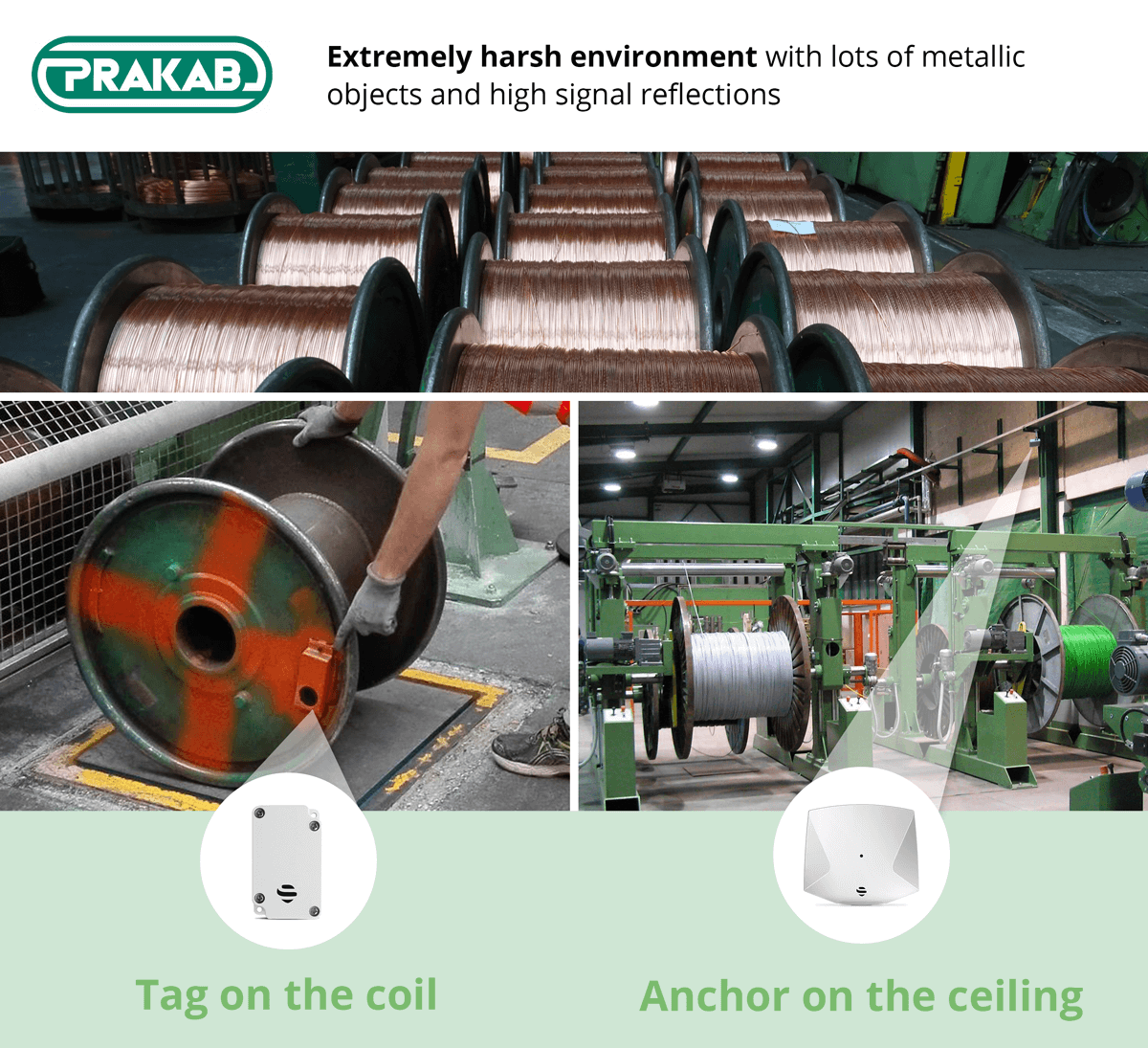
A good example is our project for Prakab, a cable manufacturer. Their tags are mounted directly on metal coils spinning at 300 RPM, in a hall full of reflections. Even there, the system delivers reliable results.
5. One Infrastructure for Multiple Use Cases
Most of the cost of an RTLS project comes from the hardware and network. That's why it's important to avoid building separate systems for each use case. In fact, Gartner found that over 75% of companies have three or more location use cases they would prefer to run on one platform.
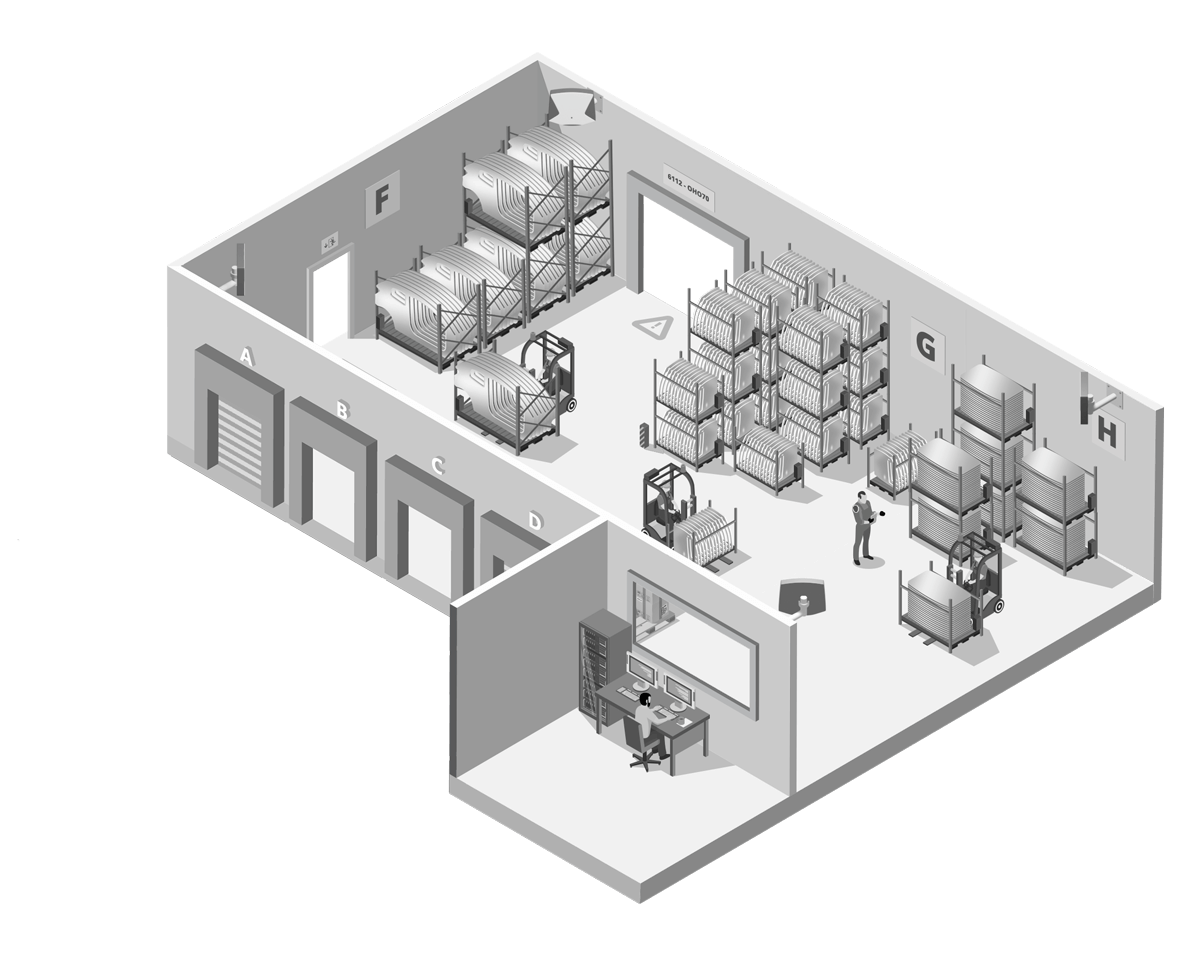
Industrial RTLS makes this possible. It offers different technologies and types of anchors to handle various coverage needs and object types, but all of them work together on the same infrastructure. Everything is connected through an open, well-documented API, so you can support multiple current and future use cases with one system.
Our Industrial RTLS covers these five areas:
- Work-in-progress tracking
- Connected worker
- Asset visibility
- Intralogistics tracking
- Yard visibility


6. Open and Well-Documented API
RTLS for industries is most powerful when it connects with other systems like WMS, ERP, or FMS. Through an open API, these systems can access real-time tracking data directly.
A fully documented Open API with bi-directional integration helps leverage not only position data, but also sensor readings, building details, floor plans, and zones. It delivers not only position data, but also sensor readings, building details, floorplans, and zones. Everything that’s needed to link RTLS with third-party systems smoothly.
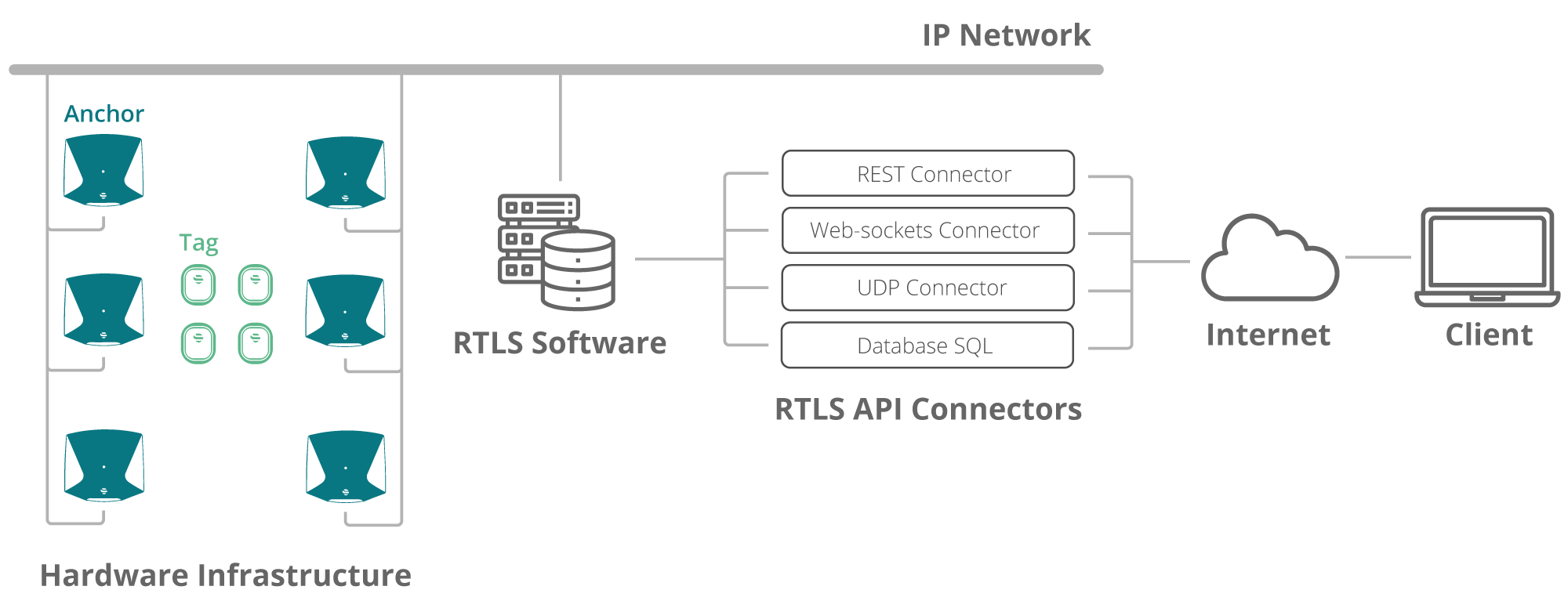
7. Transparent RTLS Cost and Maintenance Budget
A digitization project only makes sense if it pays back quickly and stays cost-effective long term. Most RTLS costs come from hardware, so a good real-time location system should minimize the number of anchors (antennas) needed by combining different antenna types for efficient coverage. Long-term costs are lower when the system is maintenance-free, durable, and tags have a long battery life.
That's why we focus not only on the RTLS platform itself, but also on every stage of its use. We provide RTLS software like RTLS Planner for cost-efficient design, RTLS Studio for deployment and system health monitoring, and RTLS Player for easy maintenance and reconfiguration. These keep costs predictable and lower over time.
8. Fast Deployment and Easy User Adoption
The speed of deployment and how quickly people adopt the system often decide whether a digitization project succeeds or fails. Getting value fast, with support from all stakeholders, is just as important as the technology itself.
Industrial RTLS should be ready to make this process easier. To quickly demonstrate RTLS value, we offer pilot projects that let you test the system on a smaller scale before committing to a full rollout.
To ensure smooth adoption, we provide free training for partners, clear documentation, and reliable support. Our experts assist both online and onsite, backed by 10+ years of RTLS experience.
Real-life Case Studies of RTLS in Industry
[solution_customer_project usecase=”” usecases=”‘fleet-tracking’,’material-flow’,’production-flow’,’employee-safety’,’quality-mangement'”]
Ready to Boost Efficiency with RTLS in Industry?
| “ |
Sewio’s ultra-wideband RTLS technology is both accurate and easy to deploy, enabling us to collect location data from our customers’ businesses to help them achieve operational efficiency. Sewio is one of our most reliable and critical technology partners. Not only do their technology and team support our business, but we also believe their products and services will continue to add more and more value to our customers in the future.” Muhsin Özezen
|