
Ultra-Wideband Technology (UWB): The Most Accurate Real-Time Location Data
Ultra-wideband (UWB) (or ultra wideband, ultra wide band) technology is a rising trend in wireless communication and real-time location systems (RTLS). It’s fast, reliable, and incredibly precise, even in tough conditions where other wireless technologies fall short.
Ultra-Wideband Technology Applications: From Industrial Efficiency to Smart Homes
With UWB, you can connect devices, track objects, and monitor people’s movements in real-time, all with 1-foot accuracy so that you can locate a single box of bolts in a 160,000 square feet manufacturing plant. But the use of ultra-wideband doesn’t stop at tracking items. With such powerful technology in hand, you can do much, much more.
What is UWB used for?
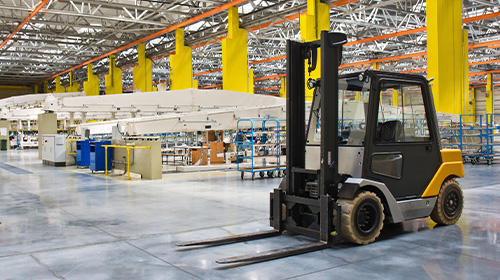
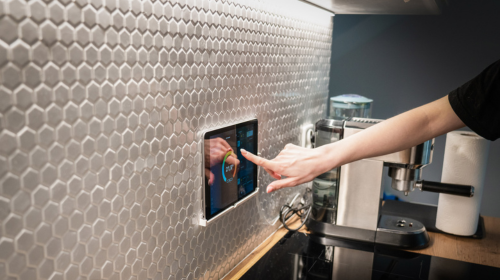



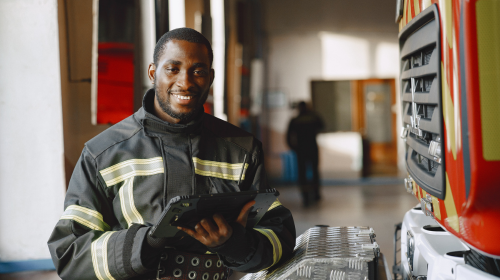
UWB is particularly suited for industrial applications and that’s why we at Sewio are so passionate about it! Find more industrial RTLS use cases explained here.
Benefits of UWB Technology: Accuracy in All Circumstances
Precise, accurate, reliable
With 1-foot precision 99.9% of the time, UWB ensures unmatched accuracy for location-based services.
It's ideal for secure real-time UWB tracking in electronics and industrial automation, i.e., locks that open only when you're right at the doorstep.
Works next to Wi-Fi and Bluetooth
UWB doesn’t interfere with other wireless technologies such as Bluetooth, Wi-Fi, and RFID.
You can use accurate, real-time UWB localization while streaming audio or running other wireless tools at the same time.
Resistance to harsh conditions
UWB can recognize direct and reflected signals, which makes it highly reliable and effective in complex environments or areas with high signal interference.
It offers reliable performance in industrial halls full of metals, concrete, and dust.
Cost–to–value ratio
UWB technology delivers an outstanding cost-to-value ratio, especially for those requiring perfect accuracy and reliability to meet high-quality standards.
Its versatile infrastructure supports numerous use cases, allowing it to replace multiple systems.



What is UWB Technology
Ultra-wideband technology sends short, high-frequency signals across a wide range of bandwidth. It uses UWB devices: wireless tags attached to the tracked assets or vehicles that send signal to anchors mounted to the walls or ceiling.
By measuring how long it takes these signals to travel between devices, UWB software can calculate the position with remarkable accuracy—down to the centimeter level. This makes the technology ideal for precise indoor location tracking without interference from other wireless signals. Read our case studies to see how manufacturing companies around the world use real-time location systems (RTLS) with UWB tracking.
Key Features of UWB Technology
- High localization precision (decimeter-level)
- No interference with other radio communication systems
- Resistant to multipath signal propagation
- Resistant to noise
- Use of low power transceivers
How UWB Technology Works
Wide Bandwidth for Smooth Operation
UWB frequency, with its wide bandwidth of 500 MHz and ultra-short pulses just 2 nanoseconds long, enables location tracking with an accuracy of up to 30 cm / 1 ft. This precision, combined with the ability to operate without interfering with other radio technologies, makes UWB ideal for real-time positioning in complex environments.


Time of Flight (ToF) for Accuracy
A key advantage of UWB is its ability to quickly distinguish between direct and reflected signals using Time of Flight (ToF). By measuring how long a signal takes to travel between devices, UWB achieves much greater accuracy than Wi-Fi or Bluetooth, which rely on less precise signal strength measurements. UWB is reliable even in environments full of metals and obstacles.
UWB Localization Techniques
Time Difference of Arrival (TDoA) for scalability
Tracking location with TDoA is perfect for industrial use, because it can cover unlimited areas and a huge number of devices. The TDoA method measures how quickly a signal reaches several receivers. By comparing these arrival times, the system can figure out where the device is located. The device only needs to send one signal, so its battery can last several years but it requires infrastructure and precise synchronization. See how Time Difference of Arrival works
Two-way Ranging (TWR) for the exact distance
Two-Way Ranging (TWR) is used in consumer applications like car key fobs. In this method, two devices send signals to each other and measure how long it takes for the signals to travel back and forth. This way the system can calculate the distance between the devices. TWR is easy to implement and doesn’t require synchronized clocks like TDoF but it has limited scalability and batteries run down faster. Discover Two-way Ranging
Angle of Arrival
To determine the exact position of objects or people, you need to know not just the distance but also the direction. That’s why Two-way Ranging is often used together with calculating the Angle of Arrival (AoA). It supports advanced features like collision avoidance and navigation in wider areas.
UWB Standards Ensure Security and Compatibility of UWB Devices
- IEEE 802.15.4 standard
- Omlox
- FiRa
- Car Connectivity Consortium
The Foundation for UWB Technology
The IEEE 802.15.4 standard is the technical standard that ensures devices can communicate using low-power, short-range signals. For users like you, this means you can rely on your UWB-enabled devices to work consistently and with high accuracy, regardless of manufacturer.
Standards for Specific User Environments
Omlox ensures seamless interoperability for UWB-based RTLS in industrial settings, uniting manufacturers of UWB chips and equipment. Sewio RTLS uses the Omlox standard to ensure that our customers get the latest features for compatibility in industrial-grade real-time location systems (RTLS).
FiRa focuses on achieving compatibility for mobile phones and personal devices, while the CarConnectivity Consortium plays a similar role in the car industry.
Using UWB means having the superpower to see where everything is, in real time, with unmatched accuracy. Can you already imagine how many ways it can help your operations?