
3B Hungária
Download Case Study PDF- Implemented By:
- IBCS Hungary
- Implemented In:
- 2021
- Industry:
- Energy
- Country:
- Hungary
- Customer Website:
- 3bh.hu/en/
- Use Cases:
Material Flow
Fleet Monitoring
Warehouse Utilization
Background
Family Business with a Drive for Innovation
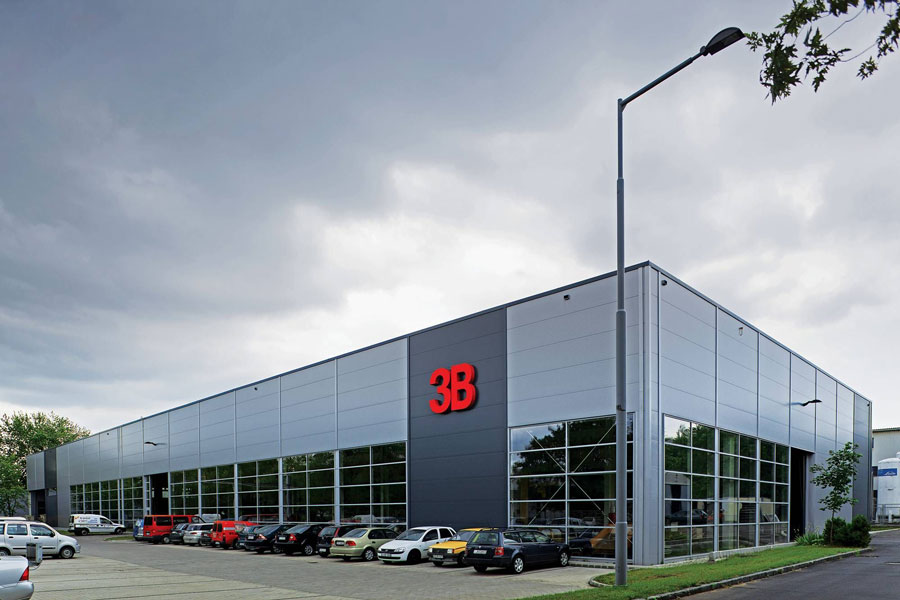
3B Hungária is a family business with a 30-year history of designing, producing, and assembling material handling equipment and professional conveying equipment, primarily for the construction, agriculture, construction, waste processing, and power industries. 3B offers an incredibly wide range of products (over 50 different types of belt conveyors) with different shell constructions made from the company’s own materials, which are the result of years of development and experience. The 3B factory employs 100 people and has continuously been growing through the development of manufacturing technology.
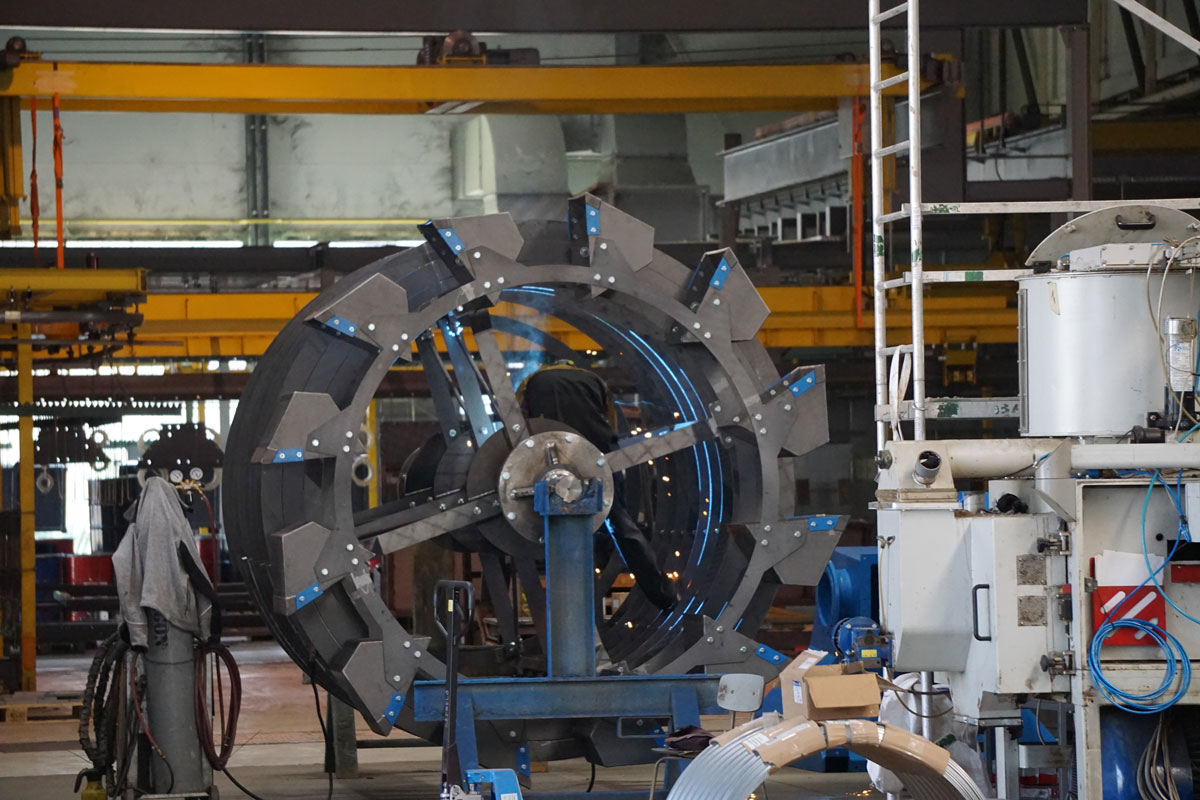
Different components for the assembly of conveying equipment.
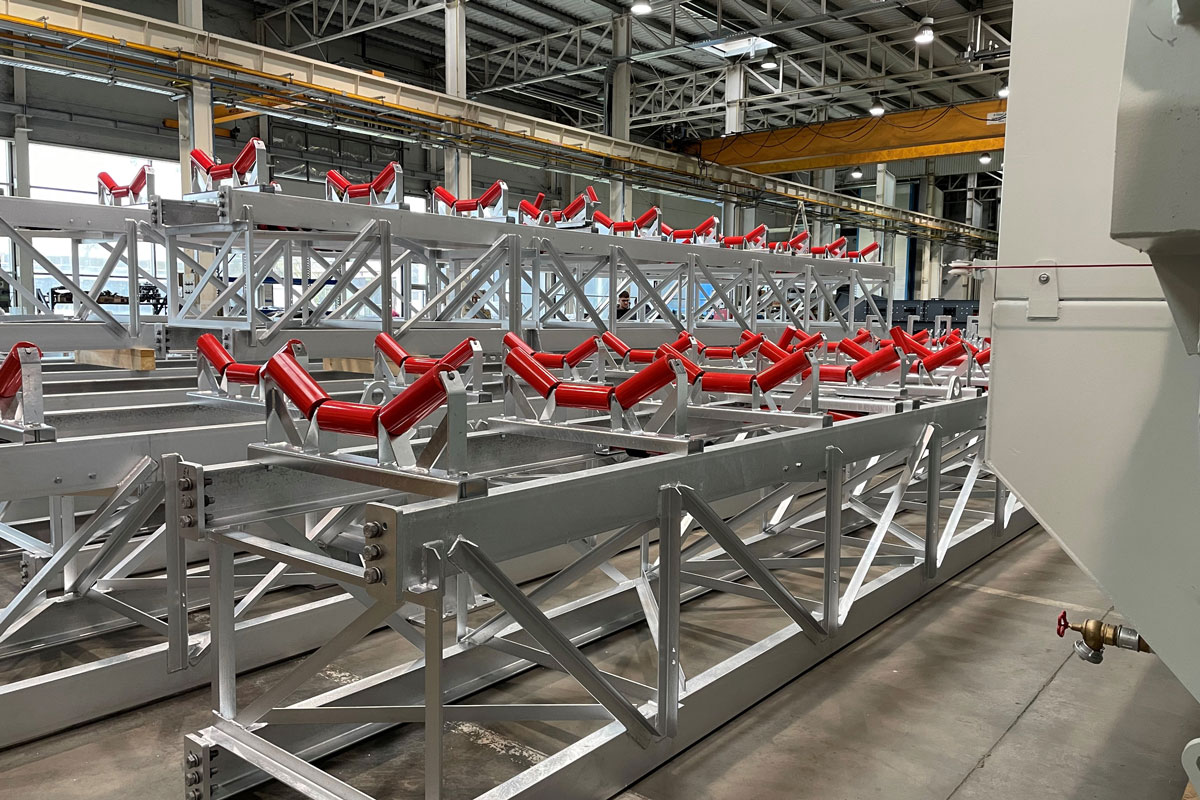
Different components for the assembly of conveying equipment.
Goals
Cutting Down on (Unproductive) Search Times and Costs
As different conveyor belts are produced at the same time and each is made with a variety of steel assembly parts, which are hard to identify due to similarity in their size and/or shape. it was a time-consuming task to find the right part at the right time within the 3200 m² production facility. Operators spend anywhere between 2 to 3 hours looking for the correct parts and sometimes they are unable to find certain parts at all, forcing them to remanufacture those, which results in long lead times, a higher possibility of exceeding the contracted deadlines, and a waste in the form of unproductive time.
The main goal of this project was to provide the localization of components within a grid on the floor plan of the production facility with a 60-centimeter accuracy in order to minimize the time needed to localize the steel assembly parts. This would significantly help to improve the efficiency of production processes and at the same time ensure easy and on-time fulfillment of deliveries, thus saving costs on penalties for missing deadlines.
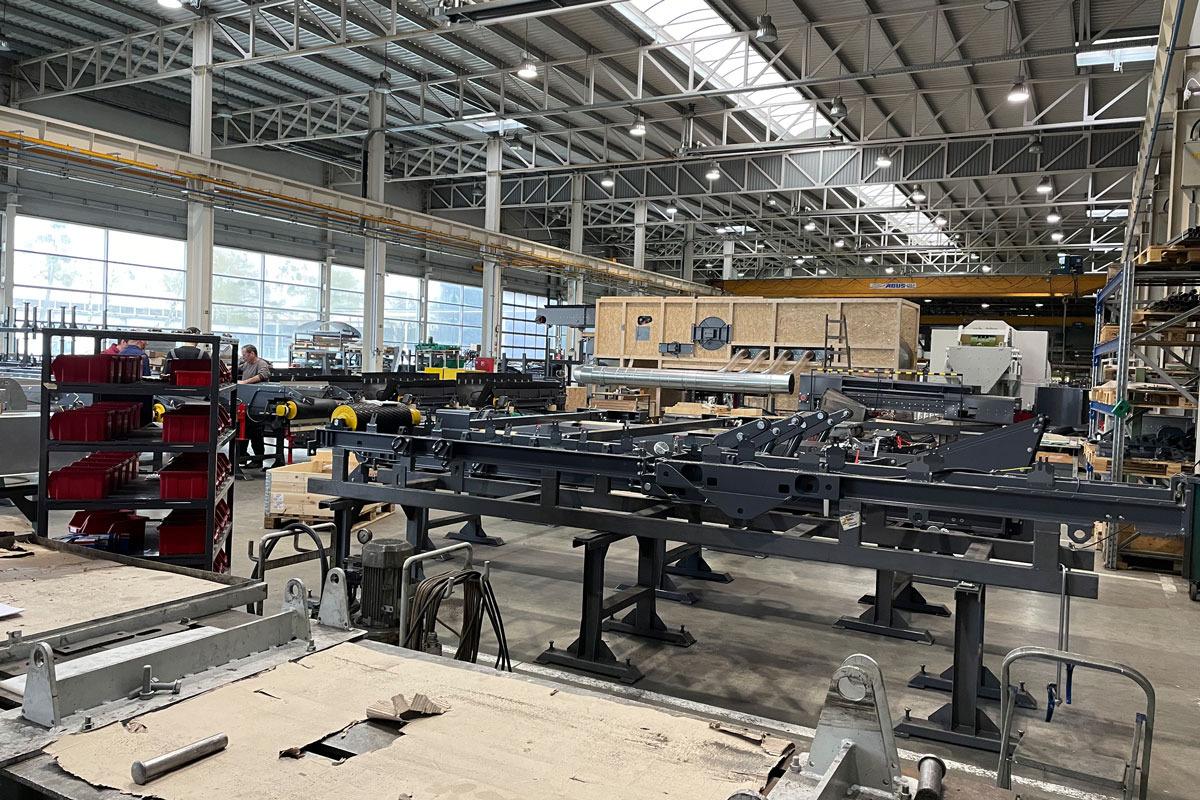
A view into a part of the 3200 m² production facility.
Challenges
Harsh Metallic Environment
The production hall is full of metal constructions, machines, tools, steel components, and several overhead cranes that all contribute to the signal bouncing and blocking, making it harder to find reliable and accurate technology for indoor positioning. These harsh conditions plus the need for high (60-centimeter) accuracy were the deciding factors for choosing UWB technology for this particular industrial use case.
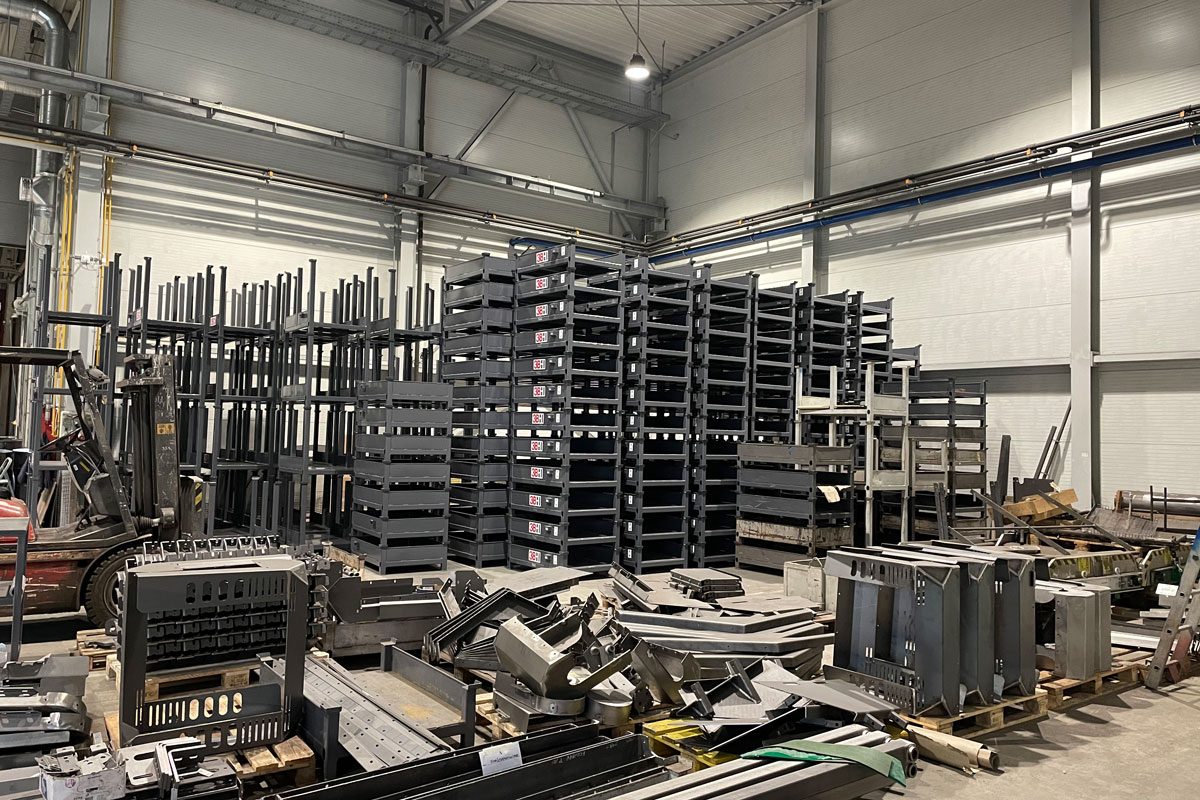
A harsh metallic environment, full of metallic pallets, components, and constructions.
Solution
Say Goodbye to Searching for Components
To cover the 3200 m² of this production hall, IBCS Hungary installed 30 anchors. Different arrangements and types of anchors have been used to get the best ROI while meeting the needed 60-centimeter accuracy. Additionally, one extra anchor was installed in the area of the loading platform for presence detection, which helps streamline the loading process and avoid making mistakes in the deliveries. To enable the tracking of components, the previously used wooden pallets were replaced by metal stacking pallets for easier attachment of the tag and there are currently 570 such pallets equipped with the Sewio tags.
On top of the hardware layer providing indoor tracking, a software application helping operators to find the necessary components had been developed. This indoor navigation software ensures that forklift operators immediately see the component within the map of the facility and its grid system to quickly identify its location and also all the pallet IDs connected to a specific order, which significantly simplifies order fulfillment for them.
Sewio RTLS was integrated by IBCS engineers who were, thanks to their experience, able to significantly reduce the time necessary for the implementation, thus improving the project’s ROI.
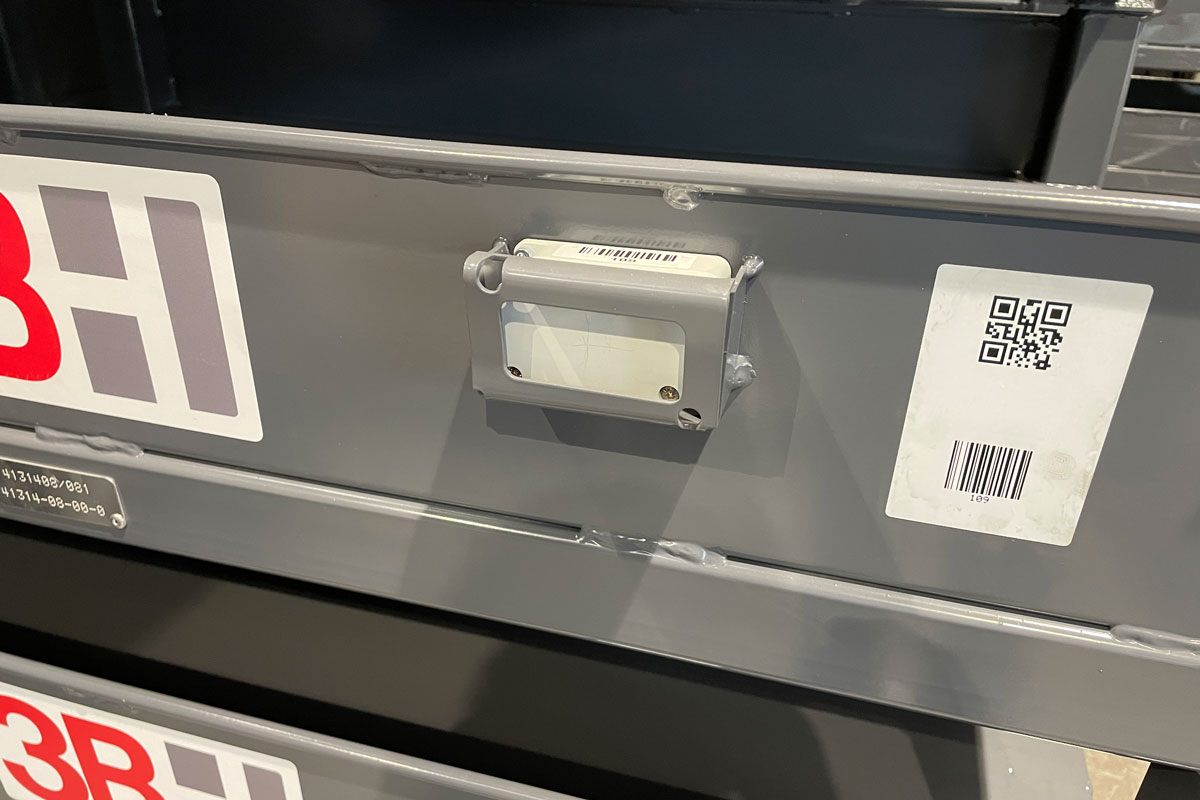
Detail of the Sewio tag attachment to the metallic pallet.
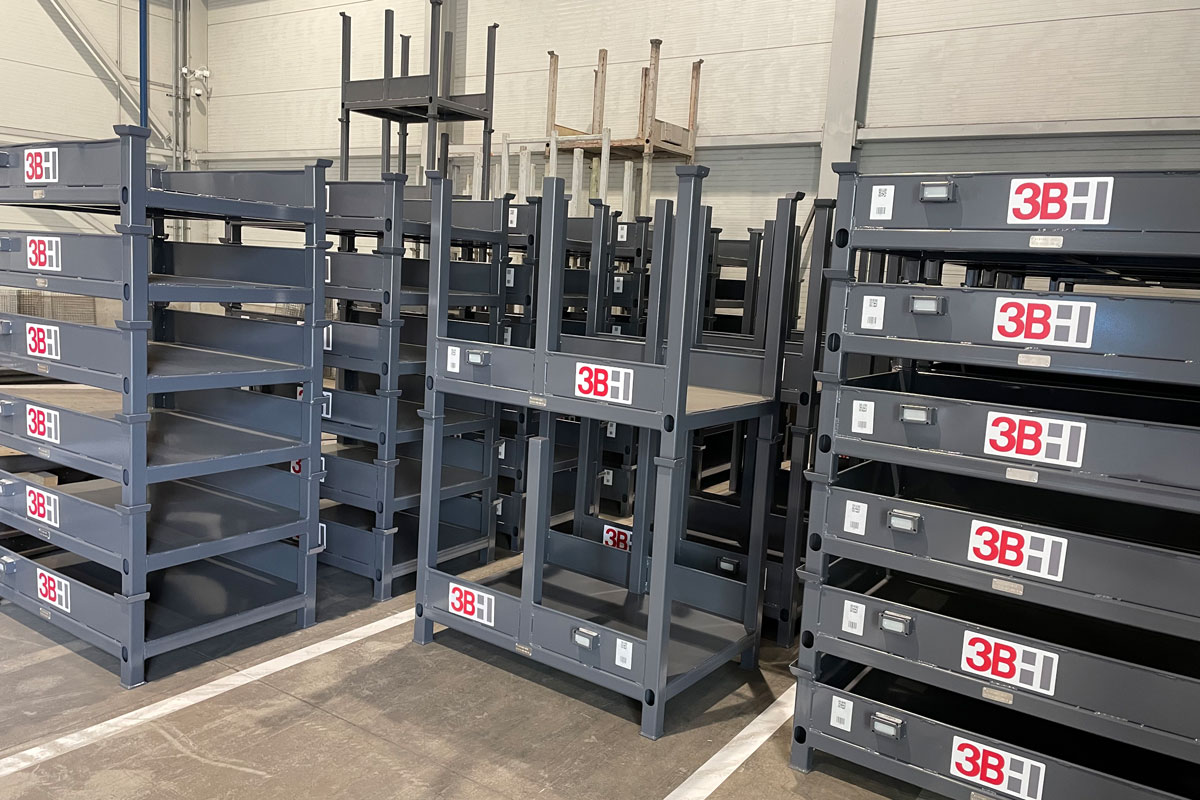
Detail of the Sewio tag attached to the metallic pallet.
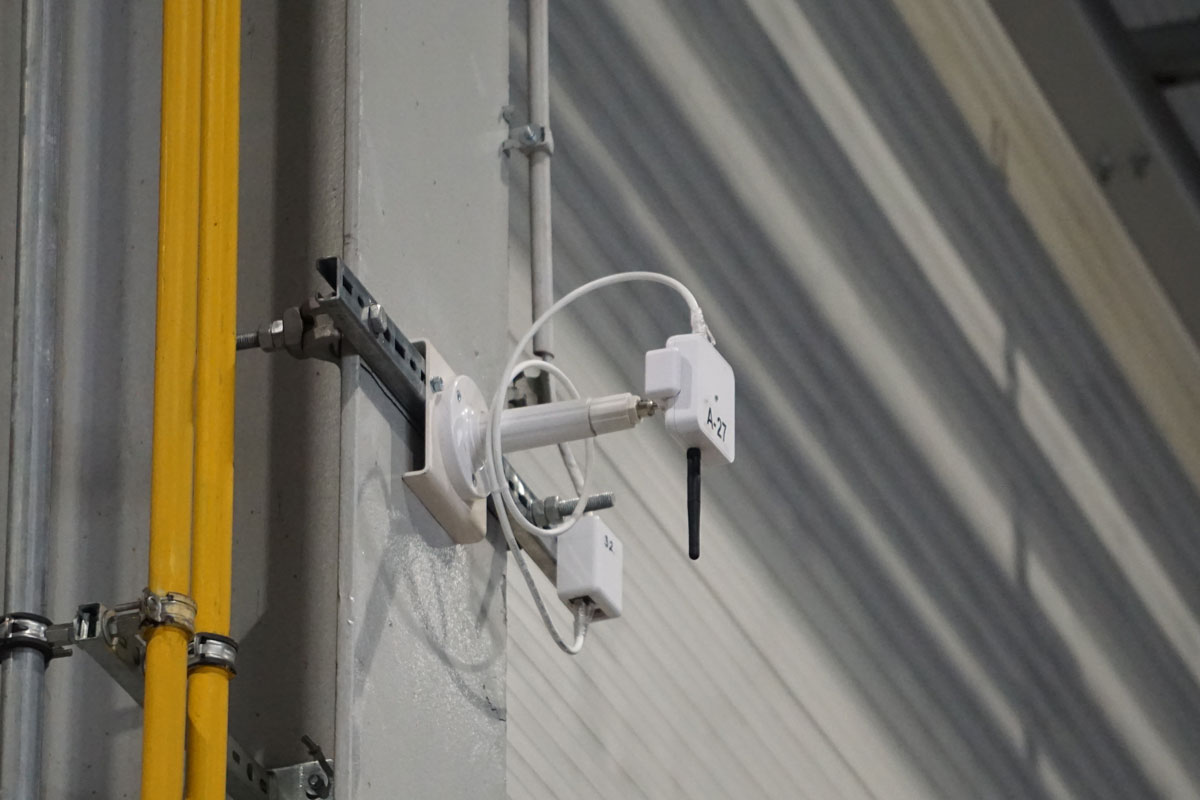
The installation of Sewio anchors by the gate and in between
the metallic constructions.
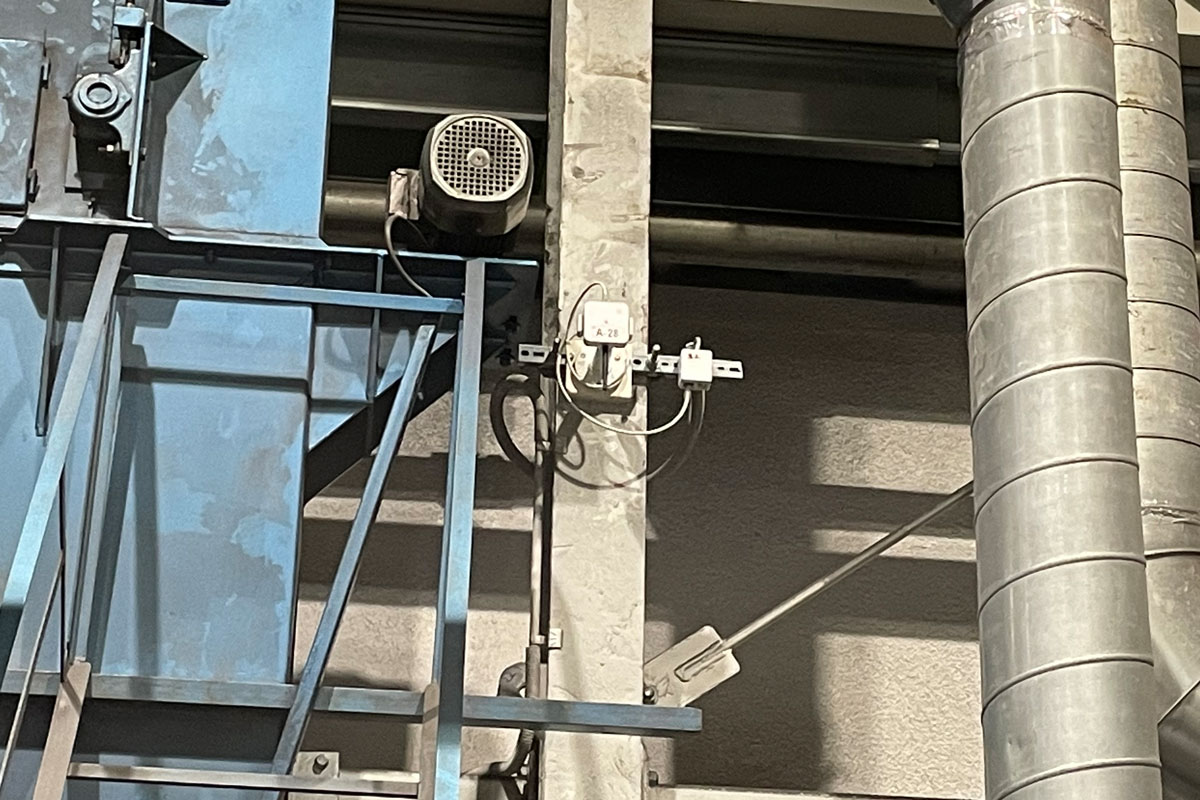
The installation of Sewio anchors by the gate and in between
the metallic constructions.
Results
The Unbelievable Drop In Average Searching Time
The process of searching for components is now fully digitalized. The ability to immediately locate the components needed for production eliminated the non-productive time wasting and significantly shortened the overall lead time.
The actual time for component searching went down from an average of 2-3 hours to 15 minutes – an unbelievable 90% drop.
Having the Sewio RTLS infrastructure in place, 3BH now has true control over the whole manufacturing process. Thanks to it, they are able to increase manufacturing quality and efficiency, reduce unproductive time and eliminate unnecessary costs, which ultimately also leads to an increase in customer satisfaction.
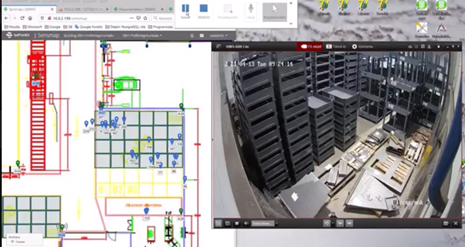
A screenshot from the RTLS Sensmap, monitoring the movement of
pallets within the production facility.
Key criteria for choosing Sewio
Reasons for Choosing Sewio RTLS
- Unlike other technologies, Sewio’s UWB-based RTLS is able to provide high accuracy even under harsh metallic conditions;
- The guaranteed long battery life of four years, even with the short refresh rate needed for tracking movement, decreases the total cost of ownership;
- The ability to scale the system easily and quickly to track more objects and expand the system to more halls;
- Open and well-documented API;
- Quick response and resolution time from support;
- Short deployment time (3 months).