
Prakab 2.0
Watch as Video Download Case Study PDF- Implemented By:
- Zealabs
- Implemented In:
- 2021
- Industry:
- Cabling
- Country:
- Czech Republic
- Customer Website:
- prakab.cz/en/
- Use Cases:
Tag-less Tracking
Indoor Navigation
Safety
Exploded Efficiency: Tag-less Tracking Digitalization in Cabling Industry
Background
A Cabling Company with a Turnover to Rival a National GDP
Prakab is a Prague-based manufacturer that for over 100 years, has been producing railway, fire-safety, and electricity cables. Prakab processes tens of thousands of tons of copper and other precious metals each year, making its overall annual turnover comparable to the GDP of Comoros.
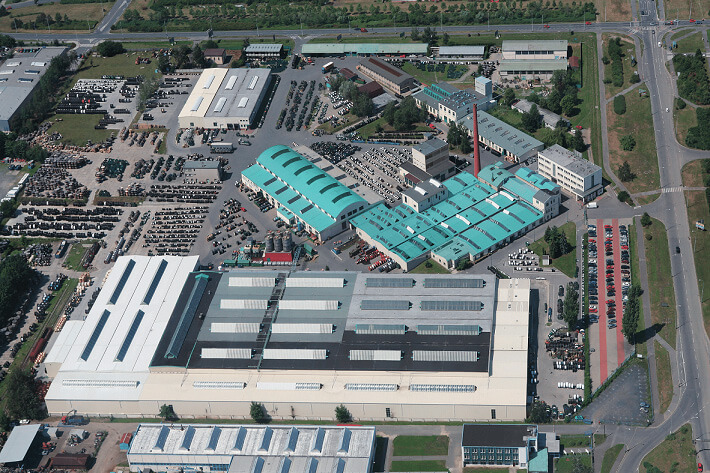
Prakab cabling factory in Prague, Czech Republic.
Goals
Reduce Production Costs Using Reliable Data
The goal of the RTLS digitalization was to reduce costs by gaining real-time work-in-progress visibility and eliminating waste across the supply chain and production process.
A core part of the goal was to optimize material consumption by minimizing human errors throughout the production process. Using the same RTLS infrastructure for navigation and operation control, Prakab wanted to improve its efficiency. This includes the elimination of unproductive searching processes, suboptimal driving paths, and unnecessary waiting times for forklifts.
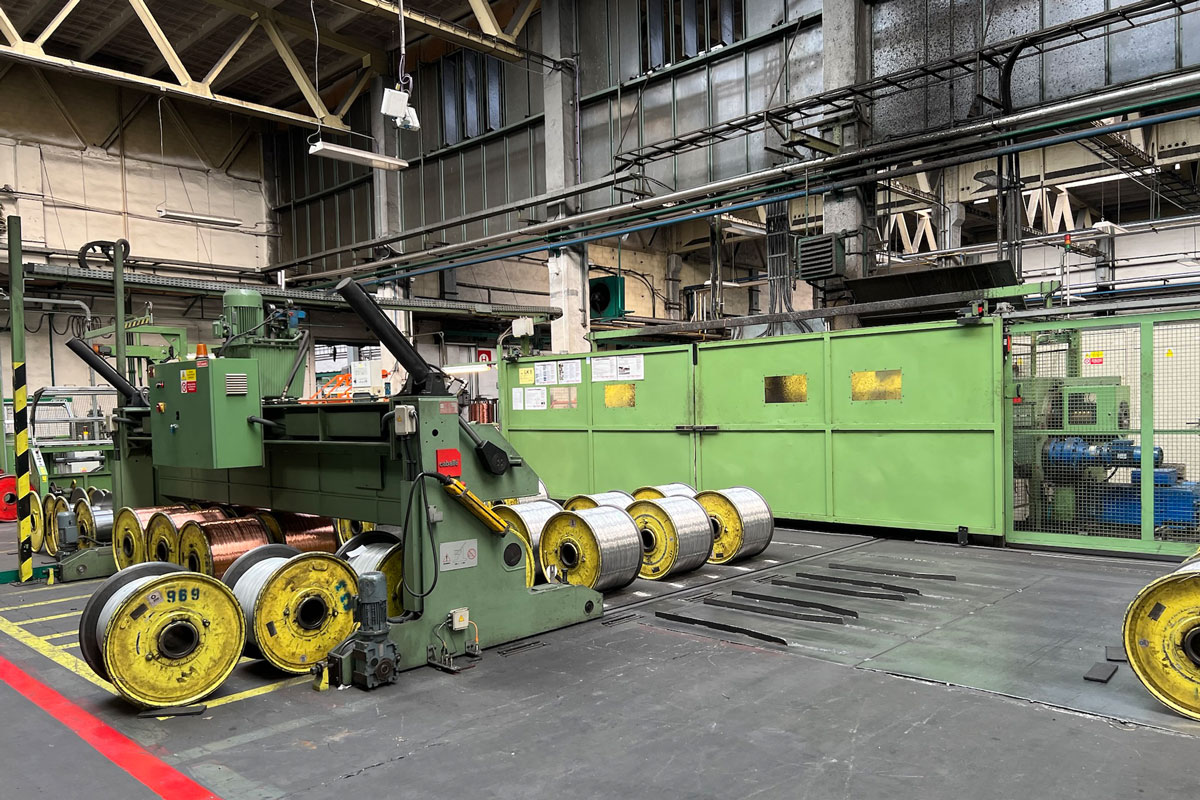
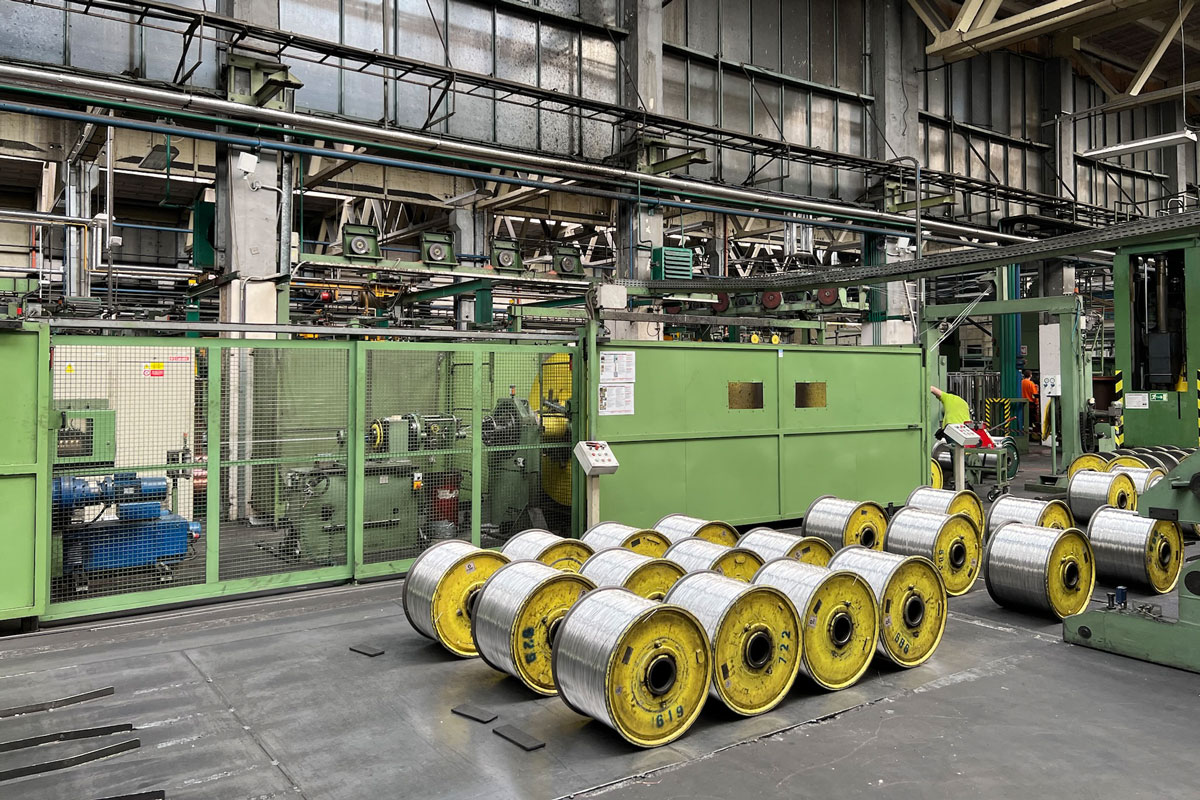
Metallic coils at the Prakab’s shopfloor.
Challenges
The Harshest Environment for Any Radio Technology
Cabling factories represent one of the harshest environments for any radio-based location system due to:
- Signal reflections from metal objects – cables, coils, winches, and other heavy machines.
- Strong magnetic fields caused by these metal objects.
- Due the rotation intensity of the coils that are being tracked, the tags on these coils need to withstand the centrifugal force.
- Coils constantly hitting other coils as they are moved and stored on the shopfloor.
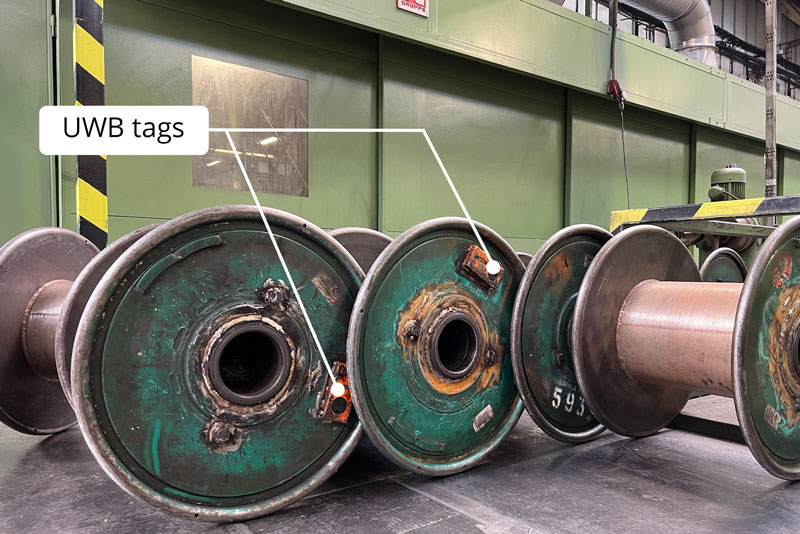
UWB tags mounted on the metallic coils.
Solution
3D Tag-less Tracking of 10,000+ Coils
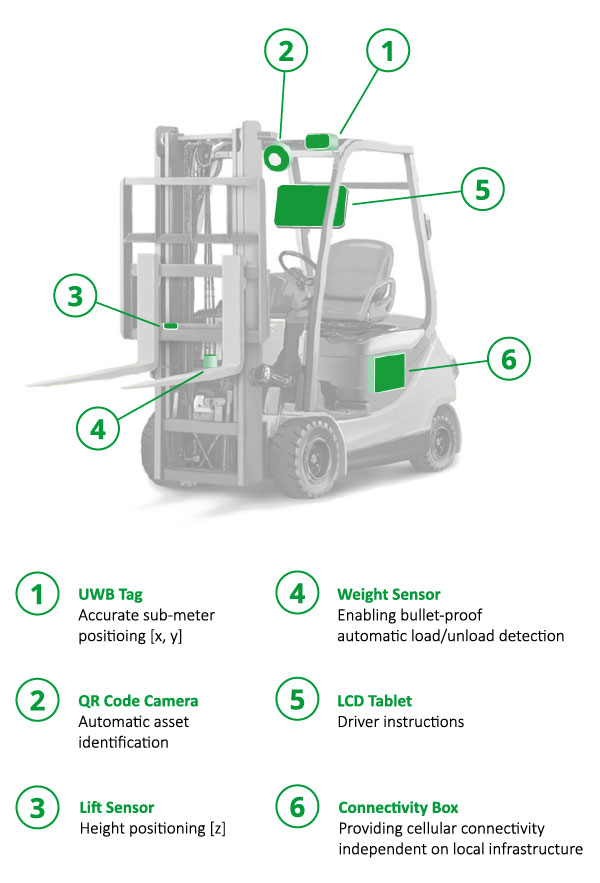
The Prakab facility stores roughly 10,000 coils. The real-time location and movement tracking of all those coils is done by monitoring only 12 forklifts, which transport them. Each coil is tagged with a cost-effective QR code to identify the product. Anytime the forklift loads a coil, multiple systems work together to record valuable information. The camera on the forklift reads the QR code to identify the product, the weight sensor on the fork detects the loading, and the Sewio tag records the position. Then the trajectory of the product’s path is recorded until it reaches its destination where it is unloaded and the height at which it is unloaded is also recorded. This entire process ensures full 3D tracking thanks to the lift sensor.
Tag-less tracking was delivered by Zealabs, which dramatically decreased the complexity and costs of the system. All due to tagging only 12 forklifts that manipulate over 10,000 coils.
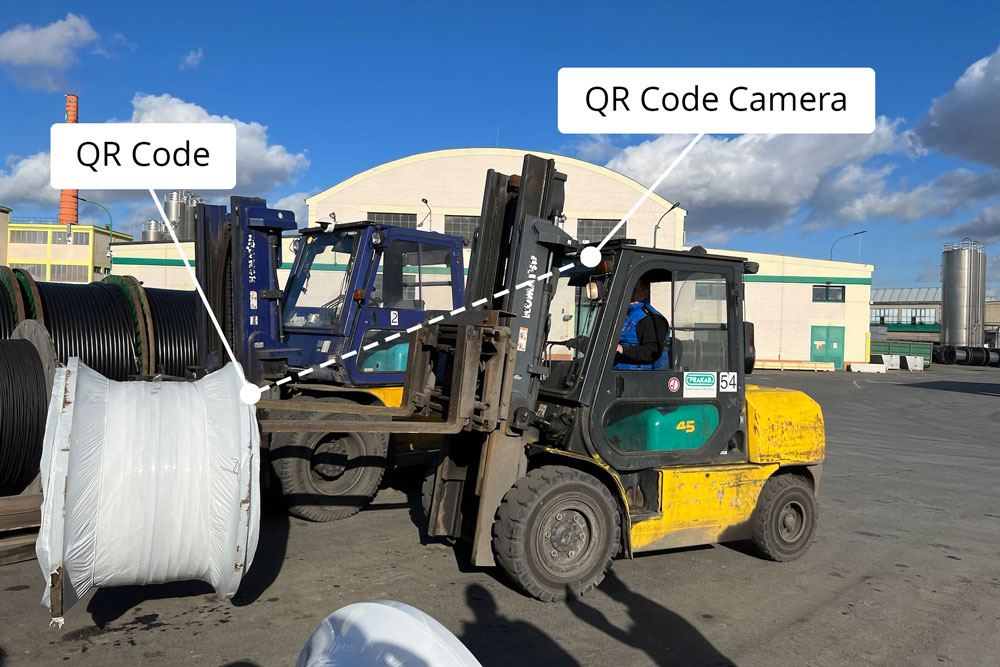
Forklift camera reads the QR code of coil while loading.
Tag-less Tracking System Components Overview
Results
Top Nine Benefits of RTLS Driven Digitization in Cabling Industry
1. The Core Use Case: Decreasing the Production Costs
A finished cable requires a lot of materials. It is reeled from a combination of wires from 12 to 18 separate coils, often combining different materials to meet the final cable’s needed characteristics, such as its electrical conductance or resistance. Production operators had to search and feed the machine that combines these coils. As with any human-operated process, this procedure was prone to errors and uncertainty as to what coils were being used for the creation of the final cable. For 100% quality assurance of the final product, a buffer of input material had to be created. Therefore, more material was used than necessary to ensure the customers’ needs in terms of required cable characteristics.
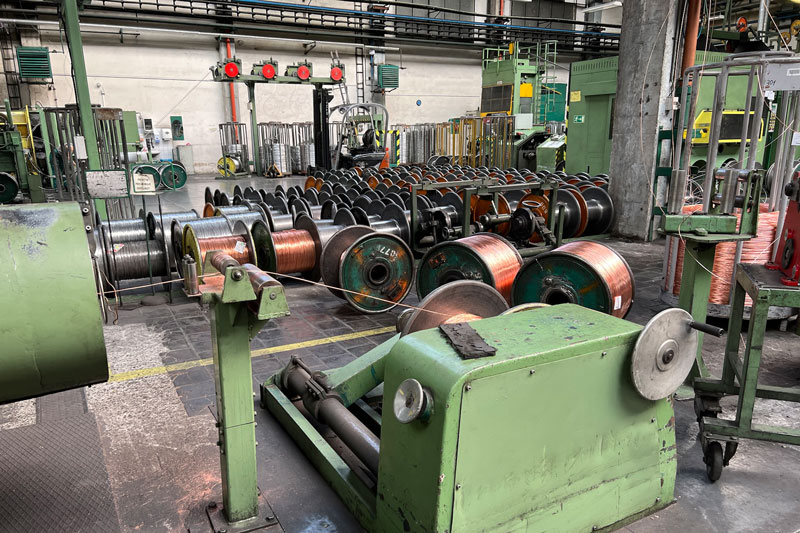
Copper coils ordered for reeling.
With an RTLS in place, the coils are being constantly tracked so production managers know the exact coils (their material and batch number) going into the production of the final cable. This allows managers to plan and control the process according to the specific characteristics needed for the final cable, saving 2% of copper annually.
The coils are not only being tracked in real-time across both indoor and outdoor areas, but they are weighed at multiple locations. Production managers are empowered to analyze the data retrospectively to identify issues in the process and optimize it. Every final cable can be traced back to the individual coils that it was made from to answer questions such as: Which coils did this particular cable originate from? Was every coil weighed properly at every weigh station? Could material be saved for the needed characteristic of cable? Etc.
2. Search and Find
Thanks to an LCD monitor secured in the forklift’s cabin, operators constantly have a map to locate the next coil in need of transport. If multiple coils are ready for pick up, they are sorted by proximity to the forklift’s current position to save time and fuel. The time saved thanks to these improvements corresponds to €10,400 saved monthly.
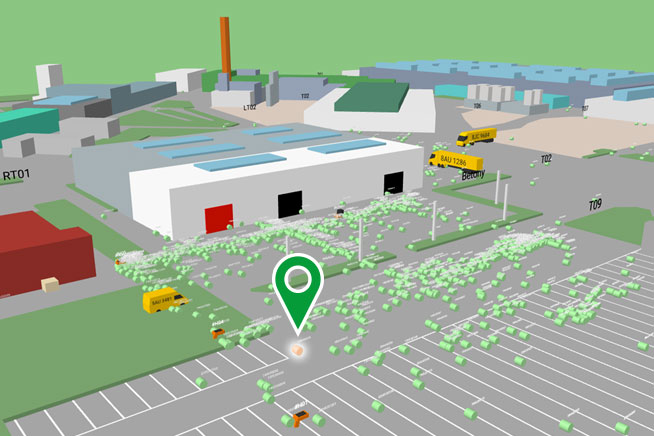
Exact 3D position of each coil.
3. Navigation to Load/Unload Position
The RTLS calculates more than the distance to the nearest coil. It also accounts for the traffic (other forklifts and personnel) and other work orders in the pipeline to deliver the best path for drivers. Once the driver picks up the coil, they are guided to the final destination in a similar way as Waze or Google Maps navigation. Prior to unloading, the systems verify the correct location to minimize errors. The streamlined forklift operation allowed to save two forklifts out of 14, a 12% decrease in material handling operational costs.
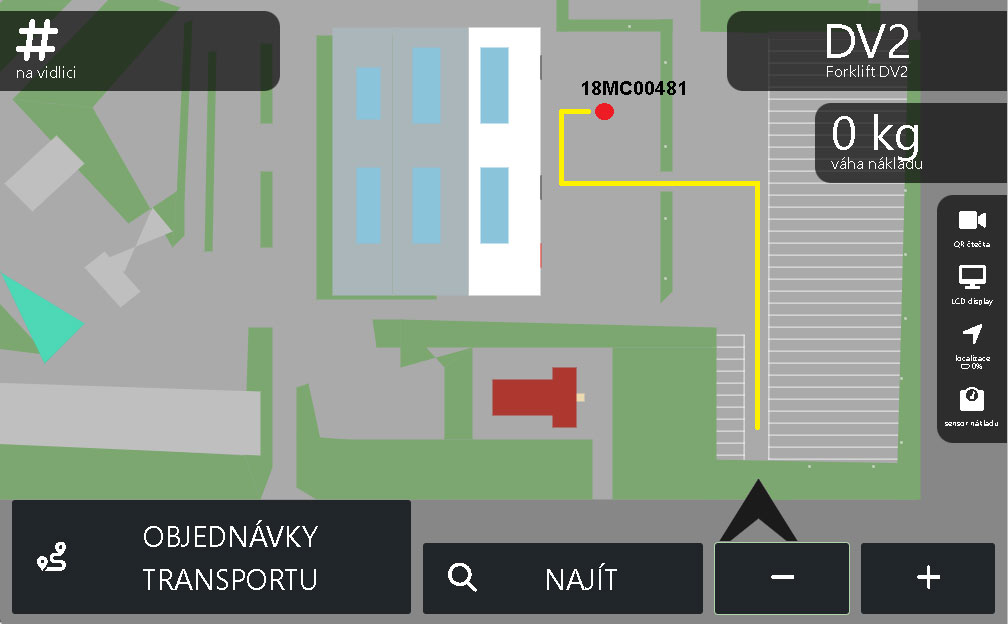
Forklift navigation to a particular coil.
4. Warehouse Utilization
When there are clear trajectories for forklifts, it’s easier to plan product storage and increase the utilization of warehouse space. Best practices include leveraging unused space, following a logical order for storage, and avoiding starting a new row/section before the previous one is fully filled. Leveraging the real-life data Prakab was able to increase the utilization of the warehouse space by 15%.
5. Increased Safety
Materials are automatically scanned during loading and unloading thanks to the forklift’s camera which reads the material’s QR code. This means that the driver doesn’t need to leave their forklift seat to manually scan materials which minimizes their time outside the safety of the cabin.
6. Inventory Optimization and Control of WIP
The tag-less tracking of all QR codes embedded in coils gives production managers a virtual window into their shop floor operations. The real-time data of work in progress inventory helps managers keep track of materials and product stock to avoid stockouts.
7. Data Driven Decisions Using Advanced Analytics
Heatmaps and spaghetti diagrams give a visual representation of the overall traffic within the facility to identify bottlenecks in the workflow and opportunities to expedite the process flow.
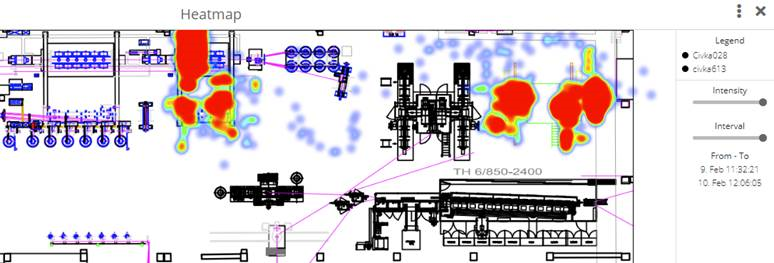
Heatmap showing traffic density.
8. Boosted OEE
Every forklift is now capable of providing valuable data. This includes the distance travelled, run/stop times, and loaded/unloaded times which, together with the exact trajectories and times, allow companies to optimize the OEE for each manipulation device.
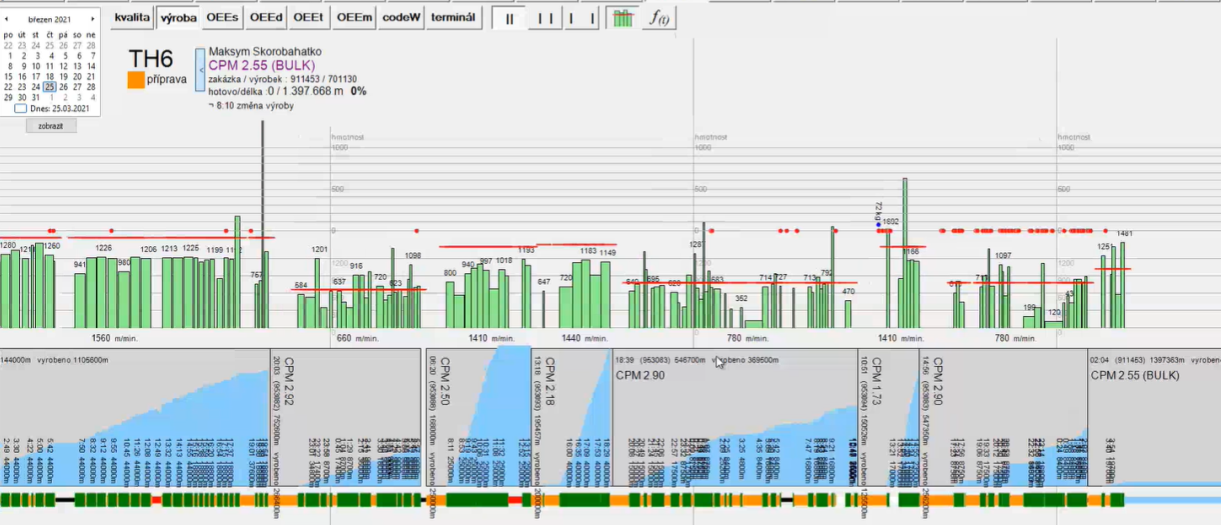
OEE data of manipulation devices.
9. Control and Monitor Assets Around the World or Shop Floor
The tracking device includes the Sigfox energy harvesting module and a battery-powered Sewio RTLS UWB tag. While Sigfox ensures worldwide tracking, Sewio Tag ensures precision tracking for the last mile within the facility.
Key criteria for choosing Sewio
Reasons for Choosing Sewio RTLS
- Unlike RFID and Bluetooth, Sewio’s UWB-based technology works with higher precision and has the ability to work in harsh metallic environments;
- the ability to combine both indoor and outdoor tracking;
- easy integration with other technologies used for tag-less tracking and with the ERP using open API;
- RTLS native zones entering control via geo/virtual fencing;
- onsite in-house support from both the partner and vendor, as well as the available remote troubleshooting tools for easy issue reproduction and quick fixing;
- the ability to scale the system easily and quickly to track more objects and expand the system to more halls.

Using Sewio RTLS we have built a comprehensive solution which has empowered Prakab with new use cases now and in the future. As the ROI of the project was met by just only one of these use cases, we are glad that all the others simply exceeded our expectations. Adrian Cech, CEO at Zealabs