

Canadian Natural Resources
Download Case Study PDF- Implemented By:
- Connectus Services Ltd.
- Implemented In:
- 2019
- Industry:
- Oil and Gas
- Country:
- Canada
- Customer Website:
- cnrl.com/
- Use Cases:
Employee Safety

Improving Employee Safety by People Tracking
Background
World Leading Independent Energy Producer
Canadian Natural Resources Limited (CNRL) is not only the largest independent natural gas producer in Canada, but also has the strongest and most diversified energy asset portfolio of any independent energy producer in the world. CNRL recently acquired the Pine River Natural Gas processing plant from Coneco Philips, this facility exports low pressure LNG and sulphur.
Goals
Improving Employee Safety During Turnarounds
Oil and gas is traditionally an industry with higher safety risks and the strongest efforts to minimize them. The refinery facilities experience planned and unplanned maintenance shutdowns and turnarounds. During this maintenance operation, 350 workers, most of whom have never been on a site before, are coming to work at the site. Not only are the place and colleagues new to them, but they are coming in with various work habits and industry norms. All of those just increase the level of risk in comparison to normal maintenance operation and require increased safety and preventative measures.
In case of an emergency, a paper-based mustering system was used at CNRL Pine River, which meant that they needed 120 minutes to complete the mustering process and some eight minutes to produce the evacuation lists at each of the mustering stations.
The objective of the digitalization of the mustering process was to know quickly how many people were in the safe area or in the hazardous area and to decrease the action time to help the injured ones as in these emergency situations, every second counts.
Challenges
100% Reliability Required in a High-Risk Environment
In such a high-risk environment – where a single mistake can result in tragedy – the safety and lives of those present are the top concerns and have the utmost importance. The accuracy and reliability of the system and the time taken could mean the difference between life and death for individuals and for the whole group. All of this creates a major demand for the overall reliability of the system and poses a specific challenge.
Solution
RTLS and RFID Technologies Combined in a Single Solution
CNRL decided to replace the paper mustering system with the Sewio RTLS powered solution to digitize and speed-up the mustering process. There were seven key locations in the plant area selected to be covered with RTLS, these included the main gate, the camp facility and all muster stations. To cover the total area of 2,800 m² of all of the seven locations, 19 UWB anchors were installed. Every worker was equipped with an employee tracking badge that featured a Sewio RTLS tag for precise positioning and an RFID chip for access control. The tracking badge also included the so called “panic button” with the “man down” feature. When the panic button is pressed, it sends an alarm to the fire and gas system and an alert to the control room.
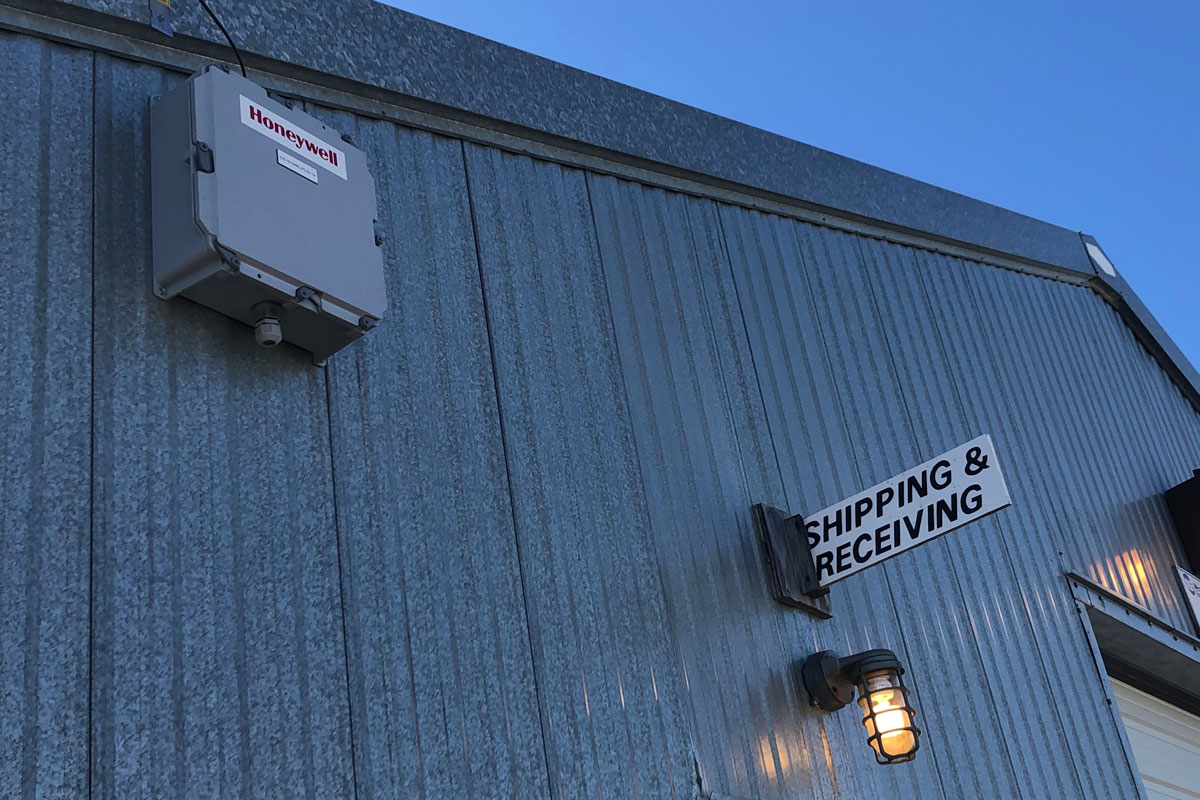
UWB anchor (signal receiver) mounted on one of the halls.
Results
Ten Times Shorter Evacuation Muster Completion
Using the digitally powered mustering system, the process is faster, more efficient, and more reliable for accounting people than the previously used paper method. It provides instant updates of those accounted for and missing persons, empowering management to make better-informed decisions. The mustering, which used to take 120 minutes, was now completed within 12 minutes during the first drill. The time needed to deliver the sign in/out sheets, which happens after the completion of mustering, was reduced from eight minutes to one second as the evacuation list is created in real-time.
The panic button and man down functionality dramatically shorten the time needed to allocate the injured person, lowering the risk of the delayed arrival of medical help.
Not only is the use of the digital mustering system recommended for risky industries by authorities including the Canadian Centre for Occupational Health and Safety (CCOHS), but it significantly reduces insurance fees.
The digital employee tracking system also helps CNRL to create direct force reports on how many people went in and out of the facility, and the integration with their access control system allows workers to use the same badge for entering different halls and rooms.
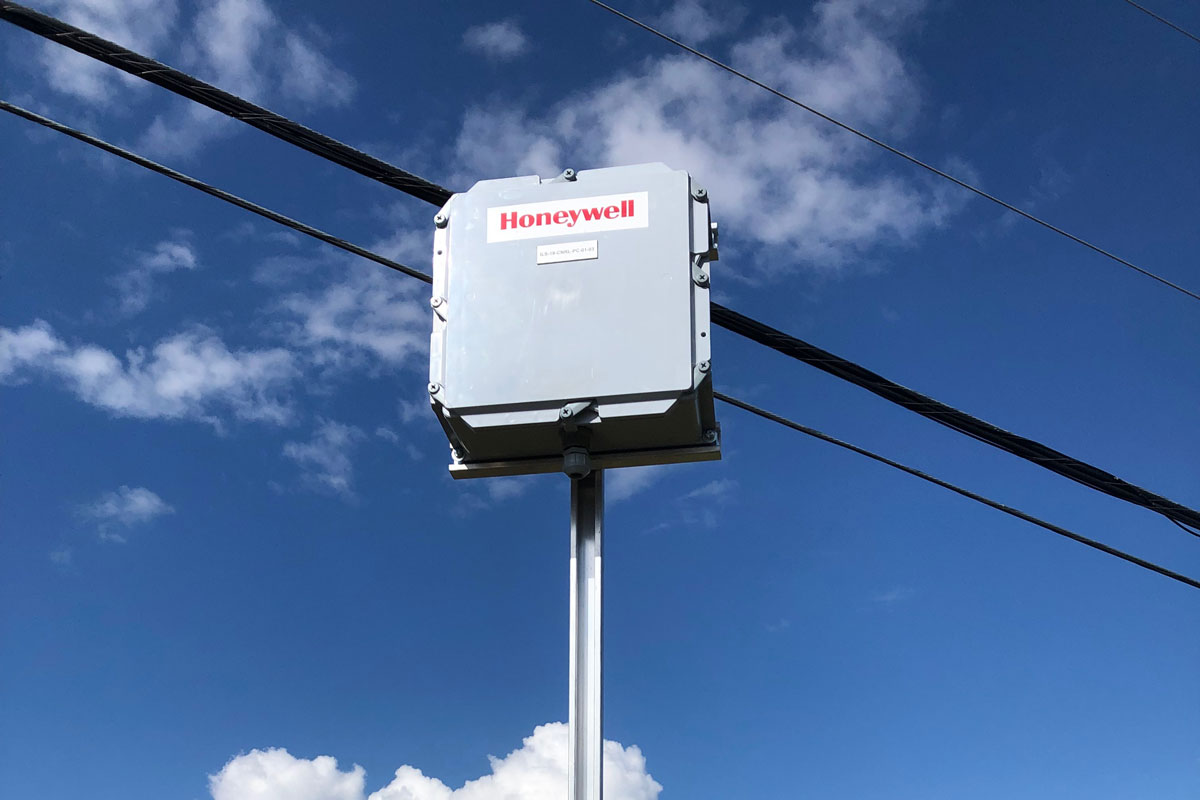
UWB anchor (signal receiver) installed on the post.
Key criteria for choosing Sewio
Key Factors for Choosing Sewio RTLS
- Seamless integration with fully documented Open API
- Real-time decision making based on reliable and actionable data
- Unrivaled scalability to deliver industry-proven tracking projects, whatever the size
- The ability to set an unlimited number of virtual zones easily that can be updated with a single click anytime in the future to adapt to the updates of logistic processes
- The 30 cm accuracy, which allows the full flexibility and variability of virtual zones without any changes to the infrastructure
- Lower maintenance and higher reliability compared to RFID-powered systems
- Long battery life
- Short time for deployment (three weeks only)